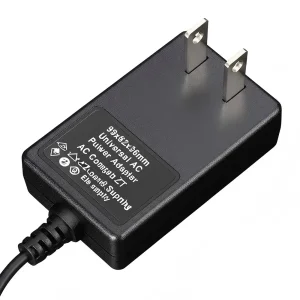
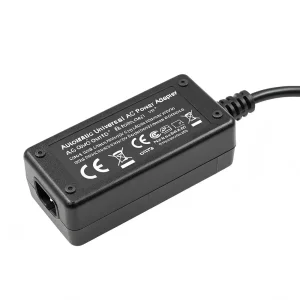
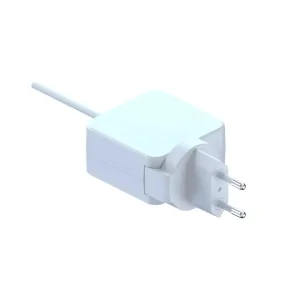
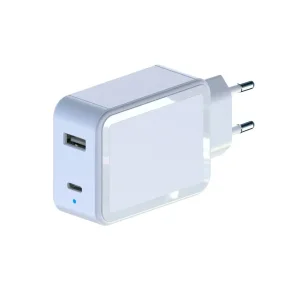
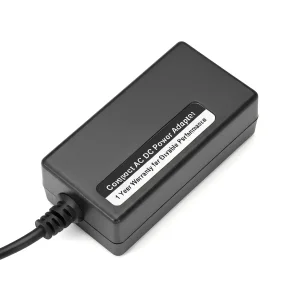
Explore our engineered switching power supplies, ultra-compact wall adapters, and high-efficiency laptop charging solutions built for global compliance.
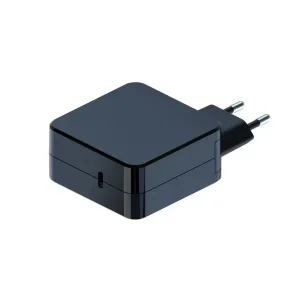
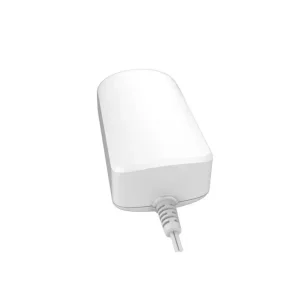
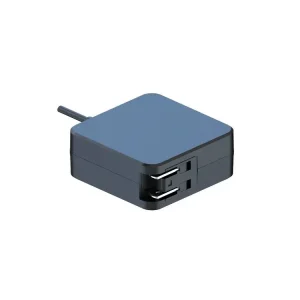
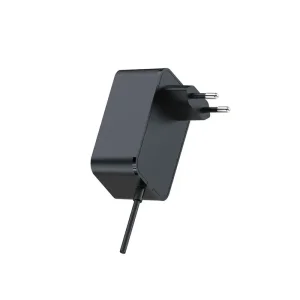
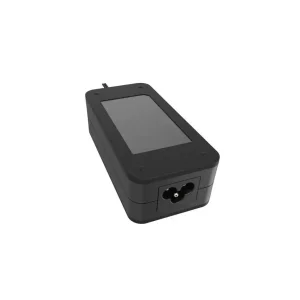
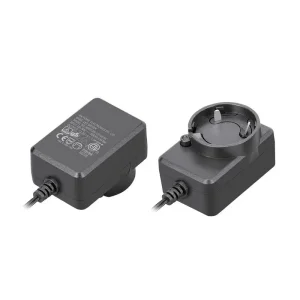
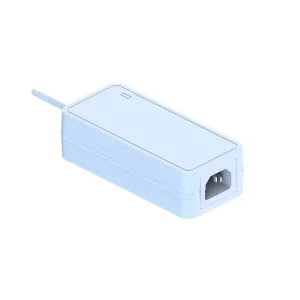
The global laptop charger industry is undergoing a monumental paradigm shift driven by unified power standards, third-generation semiconductor adoption, and escalating wattage requirements for high-performance mobile computing. Traditionally dominated by heavy, proprietary AC-to-DC brick adapters featuring legacy barrel connectors, the current ecosystem has rapidly gravitated toward high-power-density USB Power Delivery (USB-C PD 3.0 & PD 3.1) topologies. As enterprise computing platforms, ultrabooks, mobile workstations, and gaming laptops demand power delivery profiles ranging from 45W up to 240W EPR (Extended Power Range), global electronics procurement managers face complex challenges regarding regulatory compliance, energy efficiency, and thermal longevity.
In the global enterprise procurement landscape, B2B buyers require laptop power supplies that not only satisfy strict voltage tolerance thresholds (±3% to ±5%) but also deliver sub-50mV peak-to-peak ripple noise performance to protect sensitive motherboard VRMs (Voltage Regulator Modules). Furthermore, the convergence of remote work models, corporate fleet standardization, and rugged field applications requires chargers capable of seamless multi-voltage step-downs (5V, 9V, 15V, 20V, and 28V/36V/48V under PD 3.1 EPR protocols).
China stands as the undisputed nexus of global power supply manufacturing, producing over 85% of the world’s external AC/DC power adapters and laptop charging systems. This dominance is anchored in the unrivaled industrial density of the Guangdong Greater Bay Area (specifically Shenzhen, Dongguan, and Huizhou) and adjacent manufacturing hubs in Shaanxi and Zhejiang. When evaluating a China laptop charger manufacturer, enterprise buyers gain direct access to a completely vertically integrated ecosystem—from raw ferrite core processing and custom planar transformer winding to advanced SMT PCBA lines and automated ultrasonic enclosure welding.
Chinese factories operate within localized industrial clusters where high-voltage MOSFETs, Gallium Nitride (GaN) ICs (Navitas, Power Integrations, Innoscience), Japanese electrolytic capacitors (Rubycon, Nichicon), and UL-certified flame-retardant PC/ABS resins are sourced within a 30-mile radius, radically reducing component lead times.
Leading tier-1 Chinese manufacturers utilize High-Speed Fuji and Yamaha SMT lines paired with 3D Solder Paste Inspection (SPI) and Automated Optical Inspection (AOI). Integrated Manufacturing Execution Systems (MES) provide 100% component-level traceability for every serialised unit leaving the plant.
To ensure zero-defect shipment rates, Chinese charger factories enforce 100% full-load burn-in testing inside heated chambers (40°C–50°C) for 2 to 4 hours. Automated hi-pot dielectric strength testing (3000V AC to 4242V DC) guarantees safety isolation between primary and secondary circuits.
This structural manufacturing efficiency translates into significant cost optimization without sacrificing engineering integrity. By leveraging massive economies of scale, automated transformer manufacturing, and optimized bill-of-materials (BOM) sourcing, a premier Chinese OEM power adapter factory offers a 25% to 40% cost efficiency over regional Western assemblers while maintaining strict compliance with global quality management standards such as ISO 9001:2015 and ISO 14001:2015.
Modern laptop charging engineering focuses relentlessly on volumetric power density (measured in W/cm³ or W/in³), thermal dissipation management, and ultra-high switching efficiency. Leading China laptop charger manufacturers have abandoned traditional silicon Flyback topologies in favor of advanced Gallium Nitride (GaN III & GaN IV) semiconductors and high-efficiency circuit architectures.
Utilized primarily in 45W to 65W compact laptop chargers, ACF recycles the leakage inductance energy of the transformer using a secondary high-side switch, achieving soft switching (Zero Voltage Switching - ZVS) and driving operational efficiency above 92%.
For high-power computing requirements (100W to 300W+), manufacturers integrate an Active Power Factor Correction (PFC) stage (Boost PFC) with an LLC resonant half-bridge converter. This architecture guarantees soft switching across full load spectrums, keeping total harmonic distortion (THD) below 10%.
Replacing secondary Schottky diodes with low-Rds(on) Power MOSFETs driven by intelligent SR controller ICs reduces secondary-side conduction losses by up to 80%, substantially reducing thermal buildup inside sealed compact enclosures.
From an energy efficiency standpoint, top-tier Chinese manufacturers engineer laptop power adapters to satisfy and exceed global mandatory efficiency benchmarks, including U.S. Department of Energy (DoE) Level VI and European Union ErP Tier 2 (Commission Regulation (EU) 2019/1782). These standards mandate an average active efficiency exceeding 88% to 89% (depending on rated output) and a ultra-low no-load standby power consumption of less than 0.075W (75mW).
Laptop chargers and custom DC switching power adapters engineered in China serve diverse application environments. Understanding the localized electrical and physical demands of each deployment scenario allows procurement managers to select the appropriate power adapter chassis, cord strain-relief specs, and protection features.
Requirements: 65W to 100W USB-C PD 3.0 chargers with PPS (Programmable Power Supply) support. Must support dynamic voltage negotiation to power heterogeneous laptop fleets (Dell XPS, Lenovo ThinkPad, HP EliteBook, Apple MacBook Pro) via standard USB-C cables. High mean time between failures (MTBF > 100,000 hours) is mandatory to minimize IT infrastructure lifecycle costs.
Requirements: 180W to 330W high-power DC desktop adapters featuring custom 5.5x2.5mm, 7.4x5.0mm with smart pin, or slim square DC tip connectors. Utilizes dual-stage LLC resonant topologies to handle aggressive CPU/GPU transient current spikes without triggering false over-current protection (OCP) shutdowns.
Requirements: Wide-input operational ranges (90V–264V AC input, 50/60Hz), ruggedized IP67 or IP54 splash-proof enclosures, wide thermal operating range (-20°C to +60°C), and enhanced surge immunity (6kV differential mode, 10kV common mode) per IEC 61000-4-5 specs.
Requirements: Multi-port wall-mount or desktop charging stations equipped with intelligent power allocation algorithms. Dynamically redistributes wattage (e.g., 100W split into 45W + 30W or 4x20W) based on connected device handshake requirements, protected by flame-retardant UL94 V-0 housing plastics.
Procuring external laptop chargers and AC/DC power adapters directly from a Chinese manufacturer requires verifying international safety certifications and electromagnetic compatibility (EMC) test reports. Importing non-compliant power devices introduces severe legal, recall, and liability risks.
A qualified China laptop charger manufacturer must supply authentic, verifiable certificate files for the target market regions:
UL 62368-1 / cUL: Essential hazard-based safety standard replacing legacy UL 60950-1.
FCC Part 15 Subpart B: Mandatory Class B electromagnetic radiation and conducted emissions limits.
DoE Level VI / CEC Title 20: Mandatory energy efficiency and standby consumption verification.
CE LVD (EN 62368-1): Low Voltage Directive safety compliance.
CE EMC (EN 55032 / EN 55035): Conducted & radiated immunity and emissions.
UKCA / EU ErP Tier 2: UK conformity assessment & mandatory eco-design efficiency.
RoHS 3 (2015/863) & REACH: Hazardous substance restriction verification.
CCC (China): China Compulsory Certificate for safety & EMC.
PSE (Japan): Circular/Diamond PSE mark under Electrical Appliance Safety Act.
KC (Korea): Safety & EMC registration.
RCM / SAA (Australia): Electrical safety standard AS/NZS 62368.1.
As mobile personal computing hardware advances toward AI PC platforms equipped with neural processing units (NPUs) and power-hungry graphics hardware, the demand for high-wattage external power accessories continues to grow. Chinese power supply manufacturers are pioneering several key technological innovations:
Combining primary-side GaN power switches with secondary Silicon Carbide (SiC) Schottky diodes in ultra-high-power laptop chargers (150W–300W) eliminates reverse recovery losses, pushing conversion efficiencies past 95% and reducing overall adapter dimensions by over 50% compared to conventional silicon chargers.
Next-gen multi-port chargers feature programmable MCU firmware that dynamically recalculates voltage and current profiles in real-time based on temperature sensors, battery state-of-charge (SoC), and multi-device connection protocols (PD 3.1 EPR, QC 5.0, UFCS - Universal Fast Charging Specification).
In response to global ESG (Environmental, Social, and Governance) mandates, Chinese OEM factories are integrating Post-Consumer Recycled (PCR) polycarbonate plastics (up to 50%–85% PCR content) into charger housings while adopting halogen-free, lead-free (RoHS compliant) PCB substrate laminates.
Below are detailed responses to critical technical, legal, and operational questions frequently raised by B2B sourcing directors and engineering teams when evaluating laptop charger manufacturers in China.
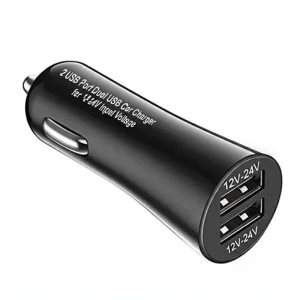
Browse our broader portfolio of universal AC adapters, desktop switching power units, car accessories, and specialized fast-charging solutions.