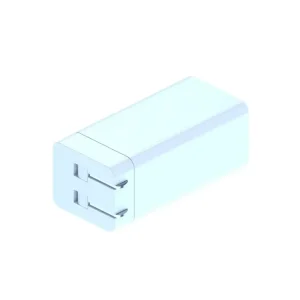
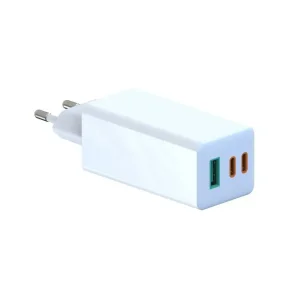
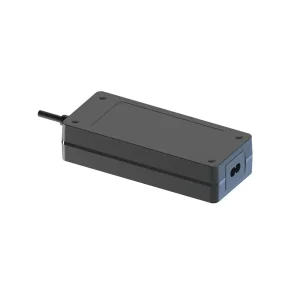
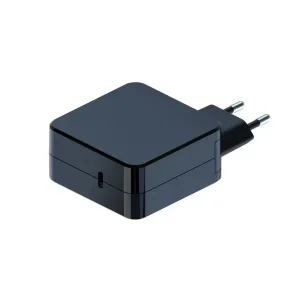
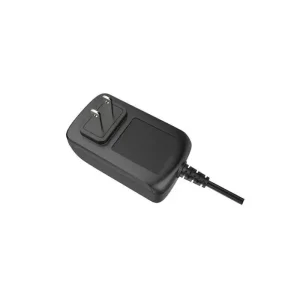
Engineered for global compliance, high energy efficiency, and extended MTBF. Explore our top OEM platform products below.
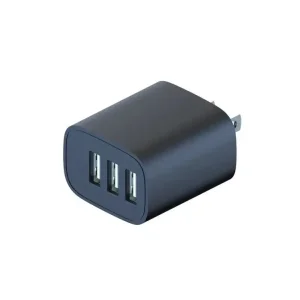
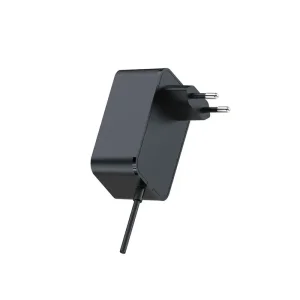
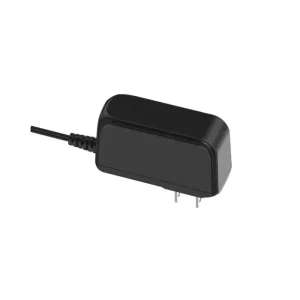
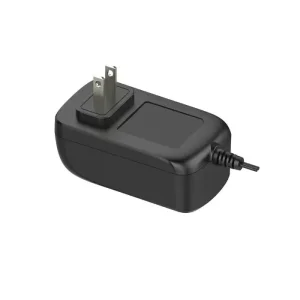
Why Tier-1 OEMs, System Integrators, and Global Brands Partner with Guangdong-Based Power Conversion Ecosystems
In the rapidly evolving global electronics landscape, USB Power Delivery (USB-PD) charging technology has shifted from a convenience-driven mobile accessory to an indispensable universal power infrastructure. Driven by EU regulatory mandates harmonizing Type-C ports across all electronic devices, along with the technological expansion of USB-PD 3.1 Extended Power Range (EPR) delivering up to 240W (48V/5A), global enterprises face an imperative: securing reliable, technologically advanced, and cost-optimized PD charging manufacturing partners.
China—specifically the Greater Bay Area encompassing Shenzhen, Dongguan, and Huizhou—serves as the epicenter of world-class switching power supply innovation. Sourcing from a premier China PD charging factory is no longer just about low unit costs; it is a strategic maneuver to leverage dense supplier ecosystems, rapid R&D prototyping cycles, localized semiconductor sourcing, and automated high-throughput SMT (Surface Mount Technology) assembly lines.
Deep vertical integration across components, raw materials, engineering prototyping, and rigorous automated testing.
Direct supply partnerships with tier-1 semiconductor foundries, MOSFET fabricators, low-ESR solid capacitor manufacturers, and PC 94 V-0 flame-retardant polymer molders eliminate multi-tier markups and buffer component lead times.
High-speed Yamaha and Fuji SMT lines equipped with 3D Solder Paste Inspection (SPI) and Automated Optical Inspection (AOI) ensure zero solder bridges, precise component placement, and low Defect Parts Per Million (DPPM) rates.
Custom ferrite core selection combined with multi-layer PCB planar transformer winding reduces magnetic losses, minimizes high-frequency electromagnetic interference (EMI), and slashes housing volume by up to 50%.
The manufacturing backbone of leading manufacturers like Shenzhen FuYun (RUIYU) Technology Co., Ltd. relies on proprietary design-for-manufacturability (DFM) guidelines. By executing transformer co-design, PCB routing optimizations, and ultrasonic housing enclosure welding in-house, production facilities maintain total traceability over component lots and batch quality.
Navigating international regulatory frameworks to ensure seamless cross-border market clearance.
Exporting power adapters across North America, the European Union, Japan, Australia, and emerging markets demands strict adherence to electrical safety, electromagnetic compatibility (EMC), and environmental sustainability standards. A failure in compliance can result in customs seizures, heavy fines, or recall liabilities.
Compliance with ANSI/UL 62368-1 audio/video/IT safety standards, FCC Part 15 Class B EMC radiated emission limits, and Department of Energy (DoE) Level VI standby power mandates (<0.1W).
Full CE-LVD safety compliance, EN 55032/EN 55035 EMC noise immunity, EU ErP Tier 2 energy efficiency targets, and RoHS/REACH chemical compliance certification for environmental safety.
Localized plug Pin configurations (US 2-pin, EU 2-pin, UK 3-pin, AU 2-pin), mandatory PSE Diamond/Circle approval for Japan, KC certification for South Korea, and CCC compliance for mainland China.
RCM/SAA safety certificates for Australia/New Zealand market entry. Specialized IEC 60601-1 3rd/4th Edition medical isolation (2xMOPP) for critical healthcare and diagnostic power supplies.
From initial schematic review to volume shipment—how tier-1 factories guarantee zero-defect execution.
For B2B buyers, product managers, and procurement leads, evaluating a PD charging factory goes beyond looking at off-the-shelf samples. Professional OEM/ODM projects require a structured engineering gate review process to ensure that thermal dissipation, ripple voltage, dynamic load transient response, and housing mechanical stress withstand severe environmental conditions.
Defining input parameters (Universal 90–264V AC), dynamic power allocation matrices (e.g., 65W dual C-port switching to 45W+20W or 30W+35W), ripple & noise limits (<100mVp-p), and protocol handshakes (PD 3.0, PPS, QC 4+, UFCS).
Computer-aided thermal simulation using CFD modeling to evaluate pot-compound heat distribution, aluminum heatsink sizing, and UL94 V-0 flame-retardant housing enclosure thickness to maintain surface temperature <65°C under full load.
Engineering Validation Test (EVT) and Design Validation Test (DVT) iterations, including 100% Hi-Pot dielectric insulation testing (3000V AC primary to secondary), drop tests, cable flex strain relief tests, and EMI pre-compliance scans.
Navigating the convergence of GaN III, UFCS Protocols, High Power Density, and Carbon Neutral Manufacturing.
Transitioning from traditional silicon MOSFETs to GaN IC topologies allows switching frequencies above 300kHz–1MHz. This reduces passive component sizes (capacitors, inductors) by 50% while elevating power conversion efficiency beyond 94%.
Adoption of Extended Power Range (EPR) up to 28V, 36V, and 48V outputs targeting gaming laptops, power tools, light electric vehicles (LEVs), alongside UFCS (Universal Fast Charging Specification) inter-brand compatibility protocols.
Deploying zero-landfill manufacturing processes, post-consumer recycled (PCR) housing plastics, halogen-free PCB laminates, and ultra-low standby power ICs (<30mW) aligned with global carbon neutrality mandates.
How versatile PD power chargers and switching supplies power critical global industries.
Fast chargers for smartphones, tablets, ultrabooks, noise-canceling headphones, and handheld gaming devices requiring multi-voltage protocol negotiation (5V, 9V, 12V, 15V, 20V).
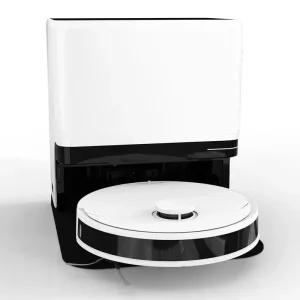
Continuous power supplies for smart displays, security cameras, smart door locks, set-top boxes, air purifiers, and robotic vacuum cleaning stations with high surge withstand immunity.
Highly stable 12V and 24V wall-mount and desktop adapters engineered for point-of-sale terminals, thermal receipt printers, barcode scanners, and interactive digital signage.
Medical-grade AC-DC power supplies featuring 2xMOPP isolation, low leakage current (<100µA), and high immunity against electro-static discharges (ESD) for patient monitoring monitors.
Detailed answers to critical technical, commercial, and logistical questions raised by global enterprise sourcing managers.
For standard housing enclosures with customized logo printing and cable specification adjustments, the typical starting MOQ is 500 to 1,000 units per model. For fully bespoke outer tooling molds or specialized PCBA form factors, the recommended first production batch is 3,000 units to amortize injection mold setup costs effectively.
Tier-1 manufacturers implement a strict Supplier Quality Management (SQM) framework. Key semiconductor components (e.g., GaN ICs, PWM controllers, synchronous rectifiers) are procured exclusively through authorized direct franchise distributors or directly from original semiconductor fabricators (such as Navitas, Power Integrations, Innoscience). Incoming materials undergo 100% IQC inspection and X-ray material checking.
Standard USB-PD supplies fixed voltage steps (5V, 9V, 12V, 15V, 20V). Programmable Power Supply (PPS) is an advanced extension of the USB-PD 3.0 protocol that enables dynamic micro-adjustments of output voltage (in 20mV increments) and current (in 50mA steps) between 3.3V and 21V. This minimizes charging conversion heat within the receiving device and accelerates battery fast-charging curves.
Every single power adapter unit manufactured undergoes a 100% full-load burn-in aging test inside high-temperature burn-in rooms (ambient temperatures maintained at 40°C ± 5°C) for a minimum of 2 to 4 hours. Automated test racks continuously cycle power on and off under maximum rated current to eliminate latent infant mortality defects prior to final packaging.
Standard enterprise-grade protection architecture includes: Over-Voltage Protection (OVP), Over-Current Protection (OCP), Short-Circuit Protection (SCP) with auto-recovery, Over-Temperature Protection (OTP) via integrated NTC thermistors, and Electrostatic Discharge (ESD) shielding. These protection threshold triggers are verified during final automated ATE testing.
Standard platform electrical samples take 5 to 7 working days. Customized PCB layouts or transformer modifications require 12 to 15 working days for initial samples. Following sample approval and sign-off, standard mass production lead time is 20 to 25 calendar days, supported by buffer stocking programs for long-lead IC components.
Explore our industrial-grade, multi-certificate power modules for high-reliability applications.