
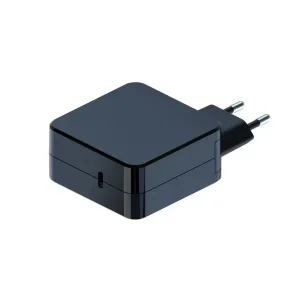
Explore our top-tier OEM/ODM power adapters engineered with high efficiency, comprehensive protection circuits, and global safety accreditations.
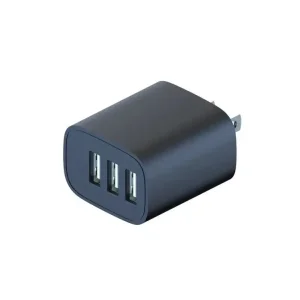
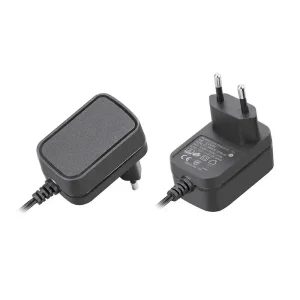
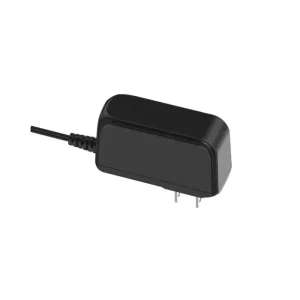
How legislative mandates, semiconductor leaps, and China's OEM integration are re-architecting external power electronics.
The global power supply landscape is undergoing a structural paradigm shift. Driven by European Union Directive 2022/2380—mandating USB Type-C as the universal charging interface for portable computing devices—and parallel regulatory enactments across North America and Asia-Pacific, legacy proprietary DC barrel jacks are being systematically phased out.
Modern laptop chargers are no longer rudimentary low-frequency transformers. They have evolved into highly complex, software-defined power conversion systems leveraging Wide Bandgap (WBG) semiconductors—specifically Gallium Nitride (GaN) power ICs—capable of operational frequencies exceeding 500 kHz.
As the primary manufacturing epicenter, China accounts for over 85% of global high-density USB-C Power Delivery (PD) adapters. OEMs and enterprise brand procurement divisions rely on the dense ecosystem of Shenzhen, Dongguan, and Guangming to secure components with strict traceabilty and low latency.
Deconstructing the internal switching topologies, magnetic integration, and protocol handshakes defining modern high-power USB-C chargers.
For power outputs below 65W, Quasi-Resonant (QR) Flyback converters with zero-voltage switching (ZVS) remain cost-effective. However, for 100W to 240W Extended Power Range (EPR) laptop chargers, Tier-1 Chinese manufacturers utilize Asymmetric Half-Bridge (AHB) or LLC Resonant topologies. These eliminate switching losses across broad input voltage sweeps (90V–264V AC) and achieve peak thermal efficiency of 95%.
Legacy wire-wound transformers are being replaced by multi-layer Printed Circuit Board (PCB) planar transformers. Integrating primary, secondary, and auxiliary windings directly into 12-layer PCBs lowers leakage inductance down to sub-100nH levels, minimizes skin-effect copper losses, and dramatically reduces mechanical profile heights to under 18mm.
| Specification Metric | Legacy Silicon Chargers (2018-2020) | 3rd Gen GaN Fast Chargers (2021-2023) | 4th Gen GaN Fast-Charging Systems (Current) |
|---|---|---|---|
| Power Density | 0.3 – 0.5 W/cm³ | 0.9 – 1.3 W/cm³ | 1.8 – 2.5 W/cm³ |
| Switching Frequency | 65 kHz – 100 kHz | 150 kHz – 300 kHz | 500 kHz – 2 MHz |
| Thermal Dissipation | Heavy Aluminum Heatsinks | Standard Thermal Pads + Plates | Potting Compound + Planar Copper Spreader |
| Protocol Compliance | PD 2.0 / QC 3.0 | PD 3.0 / PPS (Fixed Profile) | USB-PD 3.1 (EPR 28V/36V/48V) + AVS |
Customizing mechanical enclosures, IP sealing ratings, and dynamic power distribution profiles for distinct regional and vertical market deployment.
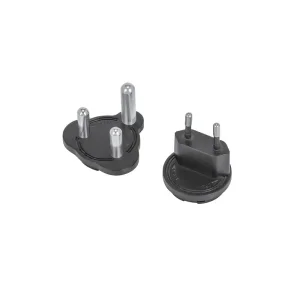
High-volume laptop manufacturers require white-label USB-C chargers with low ripple noise (<100mV p-p), wide MTBF ratings (>100,000 hours under Telcordia SR-332), and complete drop-test tolerance. Chargers feature customizable C6/C8/C14 AC inlets or regional interchangeable folding plugs (US/EU/UK/AU).
Mobile medical cart laptops and Diagnostic Workstations demand 2MOPP (Means of Patient Protection) isolation safety compliance according to IEC 60601-1 4th edition. Custom Chinese factory lines provide fully potted, anti-bacterial ABS+PC housings with leakage currents restrained to sub-100μA parameters.
Field engineering laptops and mobile test consoles operate in extreme temperature bands (-20°C to +60°C). Solutions utilize silicone potting compound encapsulation to ensure IP67 dust/moisture resistance and shock absorption against severe vibration profiles.
Rigorous multi-stage quality control mechanisms ensuring zero-defect batch delivery for global enterprise clients.
Surface Mount Technology lines utilize high-speed Yamaha and Fuji pick-and-place robotics. 3D Automated Optical Inspection (AOI) verifies solder paste alignment, component tombstoning, and micro-bridging for fine-pitch GaN ICs.
Transformers are wound automatically to maintain precise turn ratios and low inter-winding capacitance. Vacuum pressure impregnation (VPI) of varnish guarantees corona-free isolation performance under high high-pot stress.
Every produced laptop charger undergoes a 2 to 4 hour 100% full-load dynamic burn-in test inside elevated-temperature chambers (40°C ± 5°C). Ongoing Reliability Testing (ORT) samples batches for 5,000-hour continuous thermal stress assessment.
Chroma Automated Test Equipment (ATE) measures over 30 parameters: no-load power consumption, efficiency curves across 115V/230V, ripple & noise, dynamic load response, OCP/OVP/OTP trip thresholds, and USB-PD handshake responses.
Navigating international regulatory requirements with pre-certified factory reference designs.
Compliance with ANSI/UL 62368-1 safety standards for audio/video and ICT equipment. Mandatory compliance with US Department of Energy (DoE) Level VI and California Energy Commission (CEC) active efficiency and standby power thresholds (<75mW).
Low Voltage Directive (LVD 2014/35/EU) and EMC Directive (2014/30/EU) testing. Full compliance with EN 55032 Class B conducted and radiated emission limits, alongside Eco-design ErP Tier 2 energy standards.
Direct factory authorization support for Japan (PSE Circle/Diamond), China (CCC GB4943.1-2022 standard update), South Korea (KC safety + EMC), and Australia/New Zealand (RCM regulatory compliance mark).
Direct engineering insights into common technical and supply chain queries.
Browse our extended product portfolio featuring open-frame, high-wattage desktop, and dynamic multi-voltage power modules.
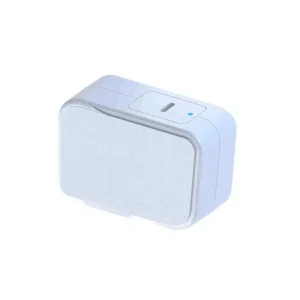
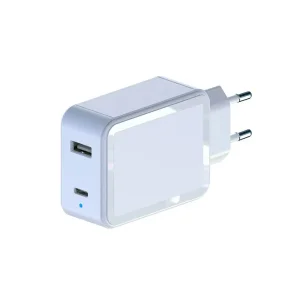
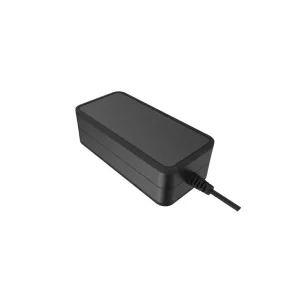
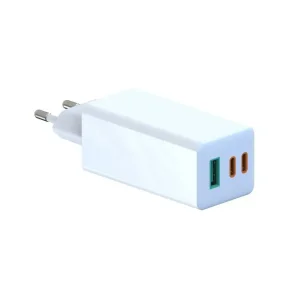
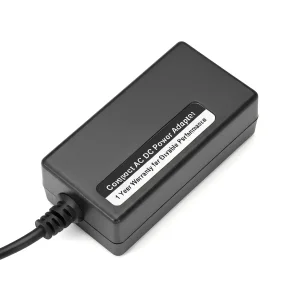
China 18W Universal External Switching Power Supply With Output 9 - 15V Manufacturer, Supplier
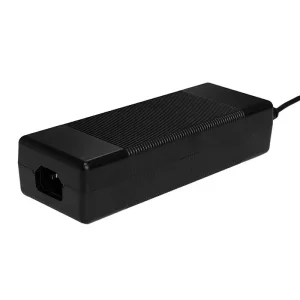
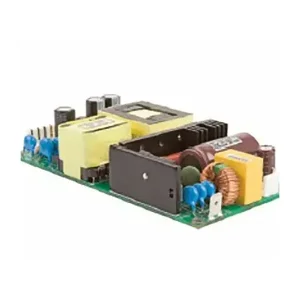
China 120W Input 90 - 264VAC Power Supply Open Frame AC DC CE Certificated Manufacturer, Supplier
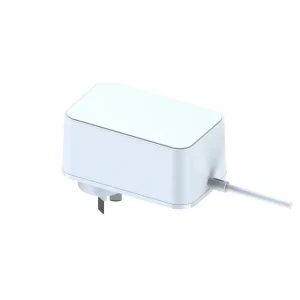
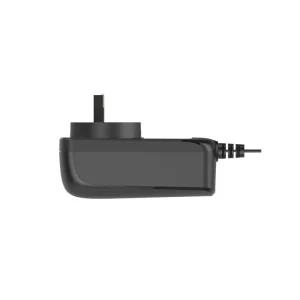
China 12v 3A Portable Universal Power Adapter Travel With SAA KA Licences Supplier, Suppliers
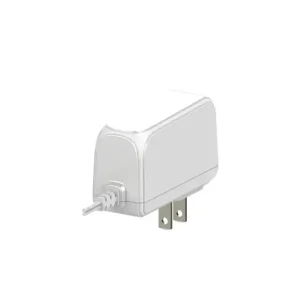
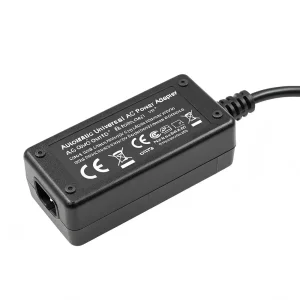
Wholesale 1.5m Cable Wall Mount Power Adapter With 5-24v Output Voltage Manufacturers, Factory