Explore our flagship series of certified switching power supplies, travel adapters, and high-performance DC power conversion units engineered for international B2B OEM/ODM deployment.
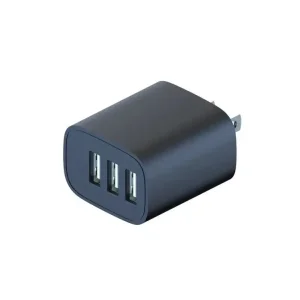
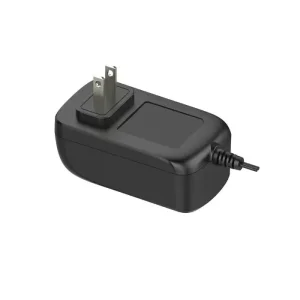
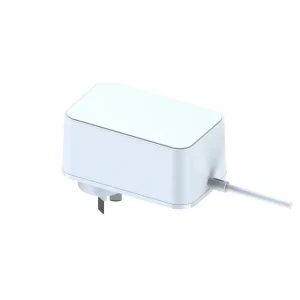
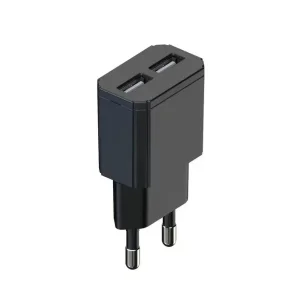
Understanding the transition from legacy 5V resistive charging to high-power, multi-voltage USB Power Delivery (PD 3.0 / PD 3.1 EPR) in automotive power systems.
Modern automotive cigarette lighter auxiliary power outlets supply an unregulated input voltage range from 12V DC (standard passenger cars) to 24V DC (heavy commercial trucks and buses). During engine cold cranks or sudden load drops, voltage transients can dip to 6V DC or spike beyond 40V DC.
Top-tier China USB C PD car charger factories utilize advanced synchronous Buck-Boost topologies. By pairing high-side/low-side N-channel MOSFETs with precision pulse-width modulation (PWM) controllers, these chargers guarantee stable, ripple-free output (5V, 9V, 12V, 15V, 20V, and 28V/36V EPR profiles) regardless of battery fluctuations.
Space within the dashboard socket is severely constrained. Traditional silicon (Si) switching transistors struggle with thermal management when delivering continuous outputs exceeding 45W. China’s leading USB-C PD car charger manufacturers lead the global transition toward Gallium Nitride (GaN III / GaN Fast) switches.
GaN devices boast significantly higher electron mobility and lower RDS(on) resistance. This allows switching frequencies to increase from 100kHz to over 500kHz, reducing the physical volume of planar transformers and output chokes by up to 60% while maintaining thermal operation under 65°C ambient enclosure conditions.
| Technical Benchmark | Legacy Silicon (Si) Architecture | Next-Gen GaN Fast Architecture | B2B Procurement Advantage |
|---|---|---|---|
| Power Density | 0.4 W / cm³ - 0.7 W / cm³ | 1.5 W / cm³ - 2.8 W / cm³ | Flush-fit mini aesthetic designs |
| Peak Efficiency | 86% - 89% | 94.5% - 97.2% | Lower thermal dissipation, higher safety |
| Max Single-Port Output | 18W - 30W Max | 100W - 140W PD 3.1 EPR | Powers laptops, drones, & handheld tools |
| Thermal Throttling Threshold | Reaches 85°C quickly at 45W load | Sustains <60°C at 65W continuous load | Extended product lifespan & zero RMA spikes |
Unrivaled component density, vertical industrial integration, and agile prototyping make Shenzhen and Dongguan the global hub for automotive power electronics.
China's Pearl River Delta concentrates over 80% of the global power management IC (PMIC) supply chain. Fast-charging controller protocol chips (Injoinic, Southchip, Merchip), power MOSFETs, precision NTC thermistors, and aluminum alloy shells are co-located within a 30-kilometer logistics radius. This minimizes raw material lead times to under 48 hours.
Tier-1 Chinese factories operate under IATF 16949 and ISO 9001 quality management standards. Production lines feature automated surface-mount technology (SMT), 3D Automated Optical Inspection (AOI), ultrasonic plastic welding, automated potting for IP67 waterproofing, and 100% full-load burn-in aging chambers.
From initial industrial design (ID) and 3D mockups to PCB layout and custom injection molding, China OEM/ODM suppliers can deliver functional working samples within 7 to 14 business days. This empowers global importers, Amazon FBA brand owners, and automotive distributors to capture emerging fast-charging trends ahead of competitors.
Stay informed on protocol shifts, sustainability regulations, and design innovations driving consumer demand worldwide.
Universal compatibility across Apple iPhone (PD 27W), Samsung Galaxy (PPS 45W Super Fast Charging 2.0), and MacBook Pro (PD 3.1 140W) is mandatory. Chinese factories integrate multi-protocol handshaking chips supporting PD3.1, QC5, PPS, AFC, FCP, and SCP simultaneously.
Multi-port chargers (e.g., Dual Type-C + USB-A) now utilize dynamic power distribution algorithms controlled by microcontrollers (MCU). Plugging in a second device instantly recalibrates power output (e.g., 100W shifts to 65W + 35W) without disconnecting the charge session.
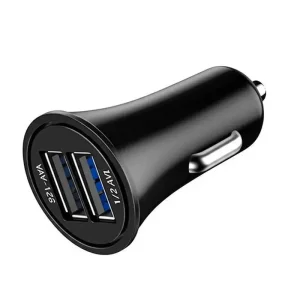
Consumers prefer car chargers that sit fully flush inside the cigarette lighter receptacle. Advanced Chinese factories design ultra-compact zinc-alloy chargers with foldable pull-ring latches that align seamlessly with modern luxury interior aesthetics.
To align with European Union ESG directives, leading suppliers offer housing options constructed from 30%-50% Post-Consumer Recycled (PCR) polycarbonate, as well as full-metal body designs that act as external heat sinks for superior thermal dissipation.
From passenger vehicle fleets to heavy-duty logistics trucks and OEM embedded dash modules, customized power hardware satisfies stringent operational demands.
High-mileage Uber, Lyft, and taxi vehicles require extreme electrical durability. Multi-port (3-port or 4-port) chargers equipped with heavy-duty copper contacts, spring-loaded anti-vibration latches, and over-temperature shutdown ensure 24/7 reliability for passengers and drivers alike.
Long-haul trucks operate on 24V battery banks that experience extreme inductive load dumps when heavy electrical machinery powers on. Dedicated 24V-rated USB-C PD car chargers integrate robust TVS (Transient Voltage Suppressor) diodes to clamp destructive voltage spikes up to 60V.
Boats, yachts, and off-grid campers face harsh marine environments characterized by high humidity, salt spray, and extreme dust. Water-resistant IP65/IP67 rated panel-mount USB-C sockets with silicone dust covers and UV-stabilized housing materials protect internal circuitry against corrosion.
Customized OEM car chargers must adhere to strict international automotive regulatory frameworks to guarantee seamless customs clearance and consumer protection.
Mandatory for all automotive electronics sold within the European Economic Area (EEA). Ensures the charger emits zero electromagnetic interference (EMI) that could disrupt critical vehicle systems like ABS, airbags, or infotainment systems.
Essential for North American retail entry. UL 2089 mandates rigorous flammability testing (UL94 V-0 plastics) and over-current protection, while FCC Part 15 Class B regulates conducted and radiated emission thresholds.
Ensures standard-compliant Power Delivery negotiation via the CC line. Prevents destructive over-voltage conditions on connected smartphones or laptops caused by improper controller firmware implementation.
How leading international importers collaborate with Chinese manufacturing engineers from concept to mass production.
Define target wattage (30W to 140W), port configurations (USB-C + USB-A), protocol requirements (PD3.1, PPS, QC), housing materials, and target pricing.
Engineers deliver 3D CAD models, schematics, PCB layout drawings, and functional prototype samples within 7-10 working days for buyer evaluation.
Custom plastic/alloy injection tooling is fabricated. Working production units undergo E-Mark, CE, FCC, or UL testing at accredited third-party labs (SGS, TUV, Intertek).
High-speed SMT assembly, 100% aging burn-in tests, laser branding, customized retail packaging printing, and FOB/DDP shipping fulfillment.
Expert answers addressing common technical, regulatory, and procurement inquiries from enterprise buyers.
For standard off-the-shelf housing molds with custom laser-engraved logos and custom color packaging, typical MOQs start at 1,000 to 2,000 units. For fully customized tooling designs (bespoke physical housing, unique port placement, or dedicated PCBA schematics), MOQs usually start at 3,000 to 5,000 units to amortize tooling and setup expenditures efficiently.
Factories utilize a multi-pronged thermal strategy: (1) Integrating high-efficiency Gallium Nitride (GaN) power switches with efficiency ratings exceeding 95%; (2) Potting internal PCB assemblies with high-thermal-conductivity silicone compound to conduct heat away from hotspots; (3) Utilizing CNC machined aluminum or zinc alloy shells as external heat sinks; and (4) Implementing NTC thermal monitoring chips that automatically throttle output wattage if internal temperatures cross predefined safety limits (e.g., 85°C).
E-Mark (ECE R10 approval) is a mandatory safety certification enforced by European transport authorities for electronic sub-assemblies installed in vehicles. Unlike standard CE testing, E-Mark explicitly verifies that the charger can withstand electrical transients (load dump, cold crank voltage drops) and will not emit electromagnetic interference (EMI) that could impair critical vehicle safety hardware, such as braking controllers, steering electronics, or airbag triggers.
Yes. Chinese manufacturers now produce USB-PD 3.1 Extended Power Range (EPR) compliant car chargers capable of negotiating 28V / 5A output profiles to deliver up to 140W of power from a standard 12V/24V cigarette lighter socket. These chargers integrate sophisticated step-up Buck-Boost DC-DC controllers to elevate car battery voltages to the required higher output levels efficiently.
Legacy multi-port chargers use fixed hardware power splitting (e.g., Port 1 is hardwired to 45W and Port 2 to 20W). Modern Chinese PD chargers utilize smart microcontroller-driven dynamic balancing. If only one device is plugged in, Port 1 yields the full 65W or 100W capacity. When a second device is connected, the internal MCU re-negotiates protocols on the fly, dividing power dynamically (e.g., 45W + 20W, or 30W + 30W) based on real-time device battery state-of-charge demands.
Standard mass production lead time is approximately 20 to 30 calendar days after formal sample sign-off and deposit confirmation. If specialized compliance certifications (e.g., UL, E-Mark, PSE) must be conducted on the final custom design, add an additional 3 to 4 weeks for testing laboratory processing.
Discover our additional portfolio of high-efficiency switching power adapters, car accessories, medical grade power supplies, and specialty electronic chargers.

Partner directly with China's leading automotive power hardware engineering team. Obtain custom BOM quotations, request 3D CAD models, or schedule a virtual factory audit today.