Precision-engineered charging platforms tested for high reliability, wide-input voltage tolerance, and dynamic thermals.
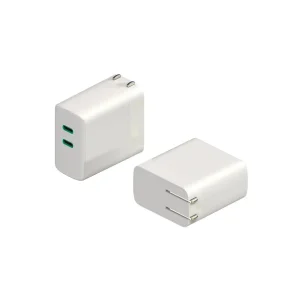
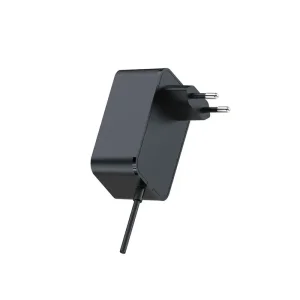
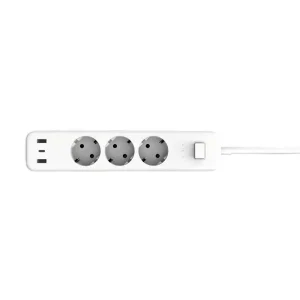
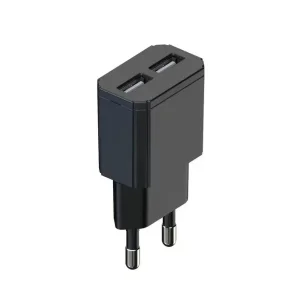
As automotive cabin electrification converges with high-power mobile computing, selecting qualified China USB Type C Car Charger Manufacturers & Suppliers requires detailed evaluation of thermal management, power density, protocol handshakes, and automotive-grade compliance.
Transitioning from silicon MOSFETs to Gallium Nitride (GaN III/IV) switching devices allows car chargers to operate at switching frequencies exceeding 500 kHz, shrinking volume by 45% while achieving 94%+ efficiency.
Unlike consumer wall adapters, vehicle DC-DC converters face harsh electrical environments. Compliance with UN ECE R10 (E-Mark), ISO 7637-2 pulse transients, and CISPR 25 Class 5 EMI is mandatory for OEM integration.
Modern multi-port USB-C car chargers dynamically reallocate power between 20W, 45W, 65W, and 100W rails based on device real-time thermals and USB PD 3.1 Programmable Power Supply (PPS) requests.
Since 2010, Shenzhen FuYun (RUIYU) Technology Co., Ltd. has grown from an specialized R&D power conversion lab into a vertically integrated global manufacturing powerhouse. Operating over 50,000 square meters of production space across Shenzhen and Shaanxi, FuYun delivers high-performance AC/DC and DC/DC power conversion hardware to global brands, including Hama (Germany), European telecom operators, and the Xiaomi eco-chain.
The evolution of in-vehicle fast charging is defined by higher voltage rails, advanced wide-bandgap semiconductors, and intelligent thermal management protocol bridges.
Traditional vehicle chargers capped power delivery at 20V/3A (60W) or 20V/5A (100W). The shift toward USB Power Delivery 3.1 introduces Extended Power Range (EPR), enabling 28V (140W), 36V (180W), and 48V (240W) voltage levels. Engineering a 140W+ USB-C car charger operating off a 12V/24V vehicle battery requires high-efficiency Synchronous Buck-Boost controllers with four-switch topology to seamlessly step up or step down voltage depending on battery fluctuation.
By integrating GaN HEMT (High Electron Mobility Transistor) switches directly with gate drivers and protection circuits, FuYun’s R&D team achieves switching speeds above 500 kHz. High-frequency switching drastically decreases the required inductance value and footprint of common-mode chokes and output inductors, resulting in ultracompact car chargers that fit flush into standard cigarette lighter sockets without overheating.
Car interior ambient temperatures routinely exceed 60°C in direct sunlight. FuYun car chargers utilize embedded negative temperature coefficient (NTC) thermistors directly adjacent to primary switches and USB-C port receptacles. Microcontrollers continuously monitor junction temperatures, adjusting charging currents dynamically (AVP - Adaptive Voltage Scaling) to keep operating thermals under 85°C without dropping connection handshakes.
Global fleet devices employ varied protocol stacks. Modern China USB Type C Car Charger designs incorporate hardware protocol controllers supporting USB PD 3.1 PPS, QC 5.0, Apple 2.4A, Samsung AFC, Huawei FCP/SCP, and UFCS (Universal Fast Charging Specification). This ensures universal handshake negotiation regardless of whether the connected endpoint is an iPhone 15/16, a MacBook Pro, a rugged handheld scanner, or a medical tablet.
| Architecture Feature | Legacy 18W/30W Silicon Chargers | Next-Gen 65W GaN Fast Chargers | Ultra-High Power 140W EPR GaN Car Chargers |
|---|---|---|---|
| Primary Semiconductor | Standard Silicon MOSFETs | GaN Fast IC (Generation III) | Integrated GaN-on-Si Power ICs |
| Topology Type | Standard Buck Converter | High-Freq Synchronous Buck | 4-Switch Synchronous Buck-Boost |
| Peak Power Efficiency | 85% - 88% | 92% - 94% | 95.5% @ 24V Input |
| Max Output Profile | 9V/2A, 12V/2.5A (Fixed) | 20V/3.25A (PD 3.0 + PPS) | 28V/5A (PD 3.1 EPR 140W) |
| Thermal Management | Passive Aluminum Heat Sink | Thermal Conductive Silicone Potting | Phase-Change Graphite & NTC Auto-Throttling |
| EMC/EMI Compliance | Basic CISPR 22 | CISPR 25 Class 4 | CISPR 25 Class 5 & E-Mark (E13) |
Commercial transportation, electric vehicles, and ride-hailing networks require specialized DC power conversion parameters designed for continuous duty cycles under fluctuating battery voltages.
Commercial trucks operating on 24V DC battery systems experience harsh voltage spikes during alternator load dumps (up to 60V transients). FuYun's commercial car chargers incorporate high-voltage TVS (Transient Voltage Suppressor) diodes and wide 9V–36V input range buck-boost circuits, maintaining safe 45W/65W USB-C output to power driver telematics tablets and ELD devices without system resets.
Modern EV interiors prioritize minimalist aesthetics and embedded high-power USB-C ports in center consoles and rear passenger seats. We provide embedded PCB modules with custom wire harnesses, aluminum heat-dissipation housings, and soft ambient LED indicator halos, engineered to meet strict automotive noise limits (CISPR 25 Class 5) to prevent interference with digital radio and keyless entry.
Taxis, Uber/Lyft fleets, and passenger buses require multi-port charging hubs capable of powering up to 4 devices simultaneously without thermal shutdown. Our multi-port car chargers feature independent DC-DC converters per port, providing unthrottled 30W USB-C PD on each channel even under 100% full-load duty cycles across 24-hour operation shifts.
FuYun Technology leverages dual production hubs in Shenzhen and Shaanxi to maintain complete vertical control over component sourcing, automated SMT assembly, and batch-level quality verification.
High-speed Yamaha SMT placement lines coupled with 3D Solder Paste Inspection (SPI) and Automated Optical Inspection (AOI) eliminate surface-mount bridging and component misplacement.
Vehicle car charger enclosures are sealed using precision ultrasonic plastic welding machines, guaranteeing structural integrity, drop resistance, and seamless finish without external screws or glues.
Every manufactured batch undergoes 4 hours of automated high-temperature aging under full load conditions, weeding out early infant mortality failures before final packaging.
Following ISO 9001 procedures, every unit carries serial number traceability mapping back to its raw component batch, SMT operator, inspection values, and shipping lot.
Established as a specialized R&D power conversion design house, developing switching topologies for global OEMs.
Built dedicated SMT assembly facilities and secured long-term contracts supplying set-top-box adapters to European telecom operators.
Qualified as a direct supplier for Germany's Hama brand and joined the Xiaomi eco-chain (ZHIMI), cementing precision quality control standards.
Passed BSCI social audit, entered Walmart's approved supply network, and established Sanyang Ruiyu & Shaanxi Ruitonglong production bases, extending into automotive chargers and robotics power systems.
We streamline custom automotive charger engineering into an eight-stage controlled workflow, ensuring rapid time-to-market and full technical transparency for international procurement teams.
Client submits target electrical specs (input range, output voltage rails, thermal envelope, target chassis dimensions). Our R&D engineers complete Design-for-Manufacturability (DFM) analysis in 48 hours.
Engineering team optimizes PCB trace widths for minimal parasitic inductance and thermal efficiency. Functional engineering samples are produced within 7 to 10 working days.
For bespoke shell designs, our internal tooling facility creates injection molds utilizing flame-retardant polycarbonate (UL94 V-0). Tooling modification cycles are completed in 15–20 days.
Our compliance department submits finished units for safety and EMC testing, managing CE, FCC, E-Mark (E13), RoHS, REACH, UL 2089, and CA Prop 65 certification filings.
Navigating global market entry demands adherence to region-specific electrical standards, environmental mandates, and automotive electromagnetic compatibility directives.
For vehicle aftermarket and OEM integration in the European Union, chargers undergo UN ECE Regulation 10 testing to obtain E-Mark (E13/E4) certification, proving non-interference with vehicle safety systems.
Products destined for the US and Canadian markets meet UL 2089 (Standard for Vehicle Battery Adapters) and FCC Part 15 Class B requirements, supported by complete NRTL testing reports.
FuYun products strictly enforce RoHS (Restriction of Hazardous Substances), REACH compliance, California Proposition 65, and halogen-free housing requirements across all customer orders.
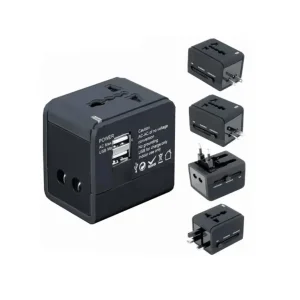
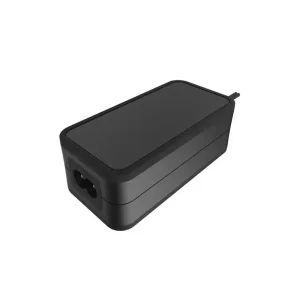
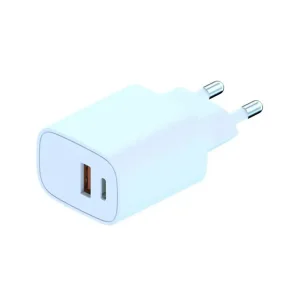
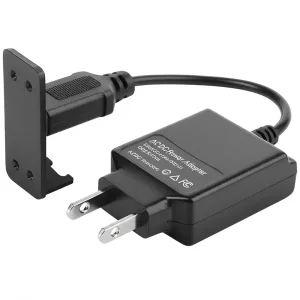
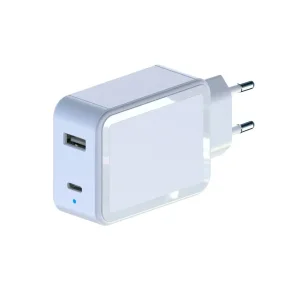
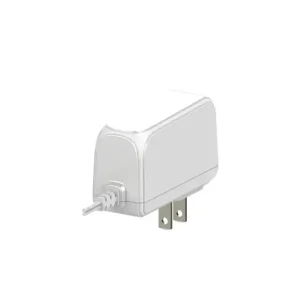
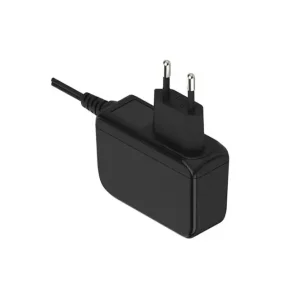
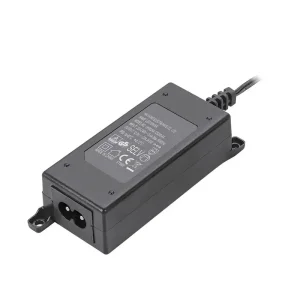
Certified multi-port, wall-mount, and vehicle chargers tailored for global B2B supply channels.
Expert insights addressing common engineering, compliance, and commercial queries from B2B buyers.