Pre-certified platforms engineered for commercial lighting, telecom infrastructure, automated POS terminals, and outdoor illuminated displays.
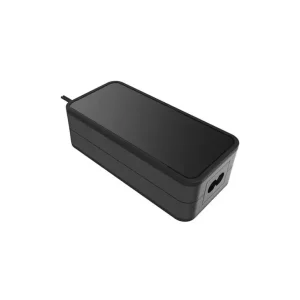
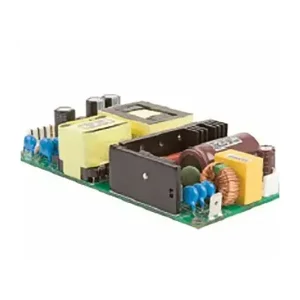
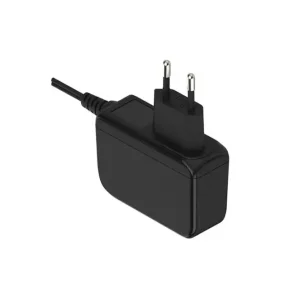
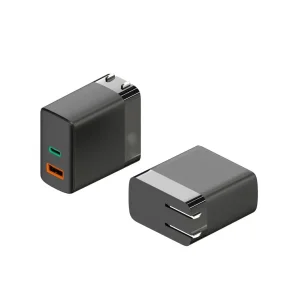
A rigorous examination of hermetic encapsulation, thermal conduction dynamics, electromagnetic compatibility, and active power factor correction (PFC) topologies.
The primary point of failure in sub-standard outdoor drivers is micro-fissuring of potting adhesives under cyclic thermal stress. Tier-1 Chinese manufacturers utilize dual-component organosilicon gels with thermal conductivity ratings up to 1.5 W/m·K. Unlike low-cost epoxy resins that harden and shear surface-mount solder joints at -40°C, high-grade silicon retains elasticity, dissipates internal hot spots, and forms a moisture barrier tested up to IP68 under two-meter hydrostatic pressure.
Modern commercial architectural and municipal street lighting demands extreme electrical discipline. Chinese factories implement two-stage active power factor correction combining boost PFC pre-regulators with resonant LLC half-bridge stages. This topology delivers an exceptional power factor (PF > 0.98) while keeping Total Harmonic Distortion (THD) under 10% across the full universal input window (90–305V AC), minimizing neutral conductor loading in three-phase city grids.
Outdoor fixtures face intense transient energy surges from nearby lightning strikes and inductive grid switches. Robust Chinese waterproof drivers integrate gas discharge tubes (GDT), metal oxide varistors (MOV) in matched delta configurations, and transient voltage suppressors (TVS). Fully compliant with IEC 61000-4-5 Class 4, drivers survive 6kV differential-mode and 10kV common-mode strikes without semiconductor puncture or latch-up events.
| Performance Dimension | Standard Commercial Drivers | Industrial Waterproof IP67/IP68 Drivers | Tier-1 China Factory Benchmark |
|---|---|---|---|
| Ingress Protection | IP20 – IP40 (Conformal Coated) | IP65 – IP67 (Polyurethane Poured) | IP67 / IP68 (Vacuum Degassed Silicone Compound) |
| Operating Temperature (Tc) | -10°C to +50°C | -30°C to +75°C | -40°C to +90°C (Extended Electrolytic De-rating) |
| Efficiency @ Full Load | 84% – 88% | 89% – 92% | 94.5% – 96.0% (Gallium Nitride Synchronous Rectification) |
| MTBF Life Expectancy | 30,000 Hours @ 25°C | 50,000 Hours @ 50°C | > 100,000 Hours @ 65°C (Calculated via Telcordia SR-332) |
| Dimming Dynamic Range | 10% – 100% (Analog 1-10V) | 1% – 100% (PWM or 0-10V) | 0.1% – 100% Continuous Flicker-Free (DALI-2 / D4i / DMX512) |
How international lighting OEMs, EPC contractors, and distributors mitigate supply chain risks while acquiring customized outdoor power modules.
North American specifiers mandate UL 1310 Class 2 compliance to limit output power below 100VA, eliminating the need for expensive conduit enclosures. The UL Class P program enables driver substitution in luminaires without re-submitting fixtures for thermal re-testing, saving thousands in testing budgets.
Procurement teams require transparent Arrhenius MTBF modeling. Our plants supply lifetime-versus-case-temperature (Tc) graphs validated with 105°C Japanese Rubycon/Nichicon long-life electrolytic capacitors, ensuring zero field electrolytic dry-out over a guaranteed 5-to-7-year service term.
When hundreds of street luminaires switch synchronously, high inrush currents cause false nuisance tripping in circuit breakers. Leading China factories engineer NTC thermistor soft-start circuits and zero-crossing detection MOSFETs to suppress peak inrush current below 15A at 230V AC.
Direct supply agreements with franchised semiconductor distributors (Infineon, STMicroelectronics, ON Semiconductor, MPS) guarantee silicon authenticity. Every PCBA batch has traceable lot barcodes linking power semiconductors back to wafer lot numbers.
How Shenzhen and Shaanxi manufacturing hubs deliver unmatched lead-time velocity, cost efficiency, and end-to-end quality sovereignty.
Planar and toroidal transformers define switching efficiency and electromagnetic interference (EMI). Rather than relying on commercial standard inductors, our facilities operate precision automated multi-axis CNC winding equipment. We wind custom split-bobbin transformers with triple-insulated wire (TIW) ensuring 3,750V AC dielectric isolation between primary and secondary stages, yielding optimal magnetic coupling and minimal leakage inductance.
Equipped with high-speed Yamaha and Fuji surface mount lines, automated paste inspection (SPI), and 3D AOI optical verification. Potting is conducted in computerized two-step vacuum chambers: pre-dispensing removes micro-bubbles, while vacuum degassing eliminates void pockets where moisture could condense during rapid temperature cycling.
Dual-hub manufacturing optimizes total cost of ownership. High-mix R&D prototyping, rapid tooling iterations, and fast-track ocean freight consolidation operate out of Shenzhen. Large-scale standardized volume manufacturing is situated in our Shaanxi industrial base, insulating tier-1 clients from labor volatility and seasonal capacity crunches.
Bridging global regulatory divergence through certified safety construction files, local field engineering, and standardized dimming interoperability.
Drivers engineered for the US and Canadian jurisdictions incorporate full compliance with UL 8750 supplement SF for light-emitting diode equipment. All models satisfy FCC Part 15 Subpart B conducted and radiated emission standards, preventing any interference with wireless communications, smart meter networks, or nearby building automation systems.
European road lighting and architectural projects require third-party ENEC testing based on EN 61347-1 and EN 61347-2-13. FuYun supplies complete DoC (Declaration of Conformity) documentation under the Low Voltage Directive (LVD) and EMC Directive, along with Eco-design compliance under Regulation (EU) 2019/2020 requiring standby power below 0.5W.
Global supply demands localized certification flexibility. We provide certified compliance with Australia/New Zealand RCM & SAA (AS/NZS 61347), Japan PSE (DENAN Law Ordinance Article 1 & 2), South Korea KC, and China CCC. Our dedicated technical construction files simplify factory audits for clients bidding on municipal projects.
Purpose-engineered drivers built to endure corrosive ocean atmospheres, intense UV exposure, desert thermal excursions, and greenhouse moisture.
High-density LED linear wall washers and pixel mesh panels demand low profile, IP67 waterproof drivers with high pulse frequency PWM dimming (>3.84 kHz) to prevent visible camera strobing during HD live broadcasting and video recording.
Highway luminaires operate continuously under extreme diurnal thermal cycling. Integrated with Zhaga Book 18 or ANSI C136.41 receptacles, our D4i drivers deliver 24V auxiliary power and bi-directional energy consumption monitoring to central city dashboards.
Greenhouses exhibit aggressive ambient humidity (up to 95% RH) and airborne chemical fertilizers. Drivers feature anodized extruded aluminum enclosures with fluoropolymer anti-corrosion coating, certified under UL 8800 for high-humidity plant growth installations.
Tunnel fixtures endure caustic vehicular emissions and high-pressure hose-downs during weekly washing. Our IP68-rated driver designs incorporate nickel-plated brass cable glands, waterproof venting valves (Gore membranes), and enhanced anti-vibration potting.
Gallium Nitride (GaN) switching, Silicon Carbide (SiC) diodes, D4i interoperability, and AI-enabled predictive maintenance algorithms.
Wide Bandgap (WBG) semiconductors revolutionize power density. By switching silicon MOSFETs to Gallium Nitride devices, switching frequencies elevate from 65kHz to over 250kHz without excessive capacitive losses. This reduces transformer core volume by 40%, slashes driver thermal waste heat by up to 35%, and yields an ultra-slim driver form factor that fits into tight fixture channels.
The convergence of LED drivers with smart city sensors is accelerating. D4i-certified drivers store asset data (Part 251), diagnostic and energy consumption telemetry (Part 252 & 253), and provide an integrated 24V bus power supply to run photocells, millimeter-wave radar motion sensors, or cellular IoT nodes directly from the luminaire housing.
Constant Light Output (CLO) firmware counters the natural lumen depreciation of LED chips across their 50,000-hour operational curve. Microcontroller-based smart drivers monitor onboard NTC sensors, gently throttling current during extreme weather events to shield light engines from catastrophic thermal runaway.
How our factory enforces end-to-end quality sovereignty from raw component arrival to certified containerized shipment.
LCR bridge validation, electrolytic capacitor leakage testing, and X-ray fluorescence (XRF) heavy metal screening under EU RoHS and REACH mandates.
High-precision pick-and-place soldering with automated SPI checks on solder volume and 3D AOI inspection for missing chips or tombstoning.
In-circuit electrical bed-of-nails testing across open/short loops, no-load voltage calibration, and preliminary switching frequency stability.
Precision dual-head dispensing of thermally conductive silicone gel inside a sealed vacuum chamber to prevent latent air void pockets.
Strict 3,750V AC hi-pot dielectric withstand verification between primary AC lines and secondary low-voltage DC lines for 60 seconds.
100% loaded dynamic burn-in in heated chambers at 45°C–50°C with automated power-cycling (ON/OFF) to eliminate infant mortality.
Chamber air-leak pressure decay testing followed by IP68 submerged water column validation to verify seal integrity at cable gland exits.
Every serialized unit records electrical test curves and operator metadata, archived in our cloud database for minimum 7-year audit traceability.
Direct technical responses addressing common engineering evaluation questions from lighting OEMs and procurement executives.
Constant Voltage drivers (typically 12V, 24V, 36V, or 48V DC) maintain a steady output voltage regardless of current fluctuations, primarily powering parallel LED strips and sign modules with onboard current-limiting resistors. Constant Current drivers adjust output voltage automatically within a compliance window to maintain exact forward current (e.g., 350mA, 700mA, 1050mA) directly driving raw high-power LED strings to eliminate thermal runaway and optimize luminaire lumens-per-watt efficiency.
Moisture frequently bypasses rubber gaskets by wicking along internal stranded copper wire strands (the capillary siphon effect) when ambient pressure fluctuates during temperature drops. Our manufacturing processes deploy localized inner potting barriers and vulcanized silicone injection molds that encapsulate bare copper wires directly before they enter the driver terminal block, creating a solid hermetic plug that permanently blocks capillary ingress.
For the US market, drivers must hold UL 8750 (Class 2 or Non-Class 2 depending on wattage) and FCC Part 15 Class A or B for electromagnetic compliance. Commercial outdoor luminaires also frequently mandate DLC (DesignLights Consortium) driver reporting. In Europe, drivers must carry ENEC or CE marking based on EN 61347-1 / EN 61347-2-13, satisfy RoHS/REACH chemical directives, and comply with ErP Tier 2 efficiency and standby power limits.
For drivers built upon existing pre-certified electrical topologies (customized lead wires, branded metal cases, or specialized output current settings), sample turnaround is 7–10 business days, with mass production completing in 20–30 calendar days. Minimum order quantities start at 500 units for standard tooling, while fully customized bespoke aluminum extrusions with dedicated safety certification submissions typically require an initial commitment of 2,000–3,000 units.
Acoustic buzz is caused by magnetostriction in magnetic cores operating under low-frequency PWM dimming pulses. Our engineering teams utilize high-frequency PWM (>3.84kHz) or hybrid continuous amplitude linear dimming (CCR). In conjunction with vacuum-impregnated transformer varnish and dense silicone potting that dampens physical vibrations, drivers achieve completely silent operation (sound pressure < 24 dBA at 1 meter).
All products are covered by a 5-to-7-year replacement warranty backed by serial tracking. When a defect occurs in the field, our engineering team requires the unit serial number and photos of the installation layout. If an RMA is initiated, defective units undergo 8D Root Cause Failure Analysis in our Shenzhen reliability lab—including decapsulation, micro-sectioning of semiconductor dies, and surge event waveform inspection—with a detailed engineering report issued within 5 business days.
Comprehensive power supply inventory manufactured under ISO9001 quality systems and tested for extreme environments.
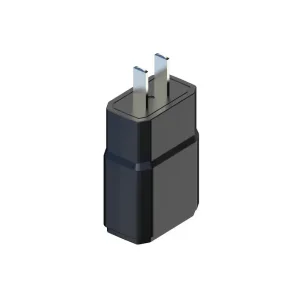
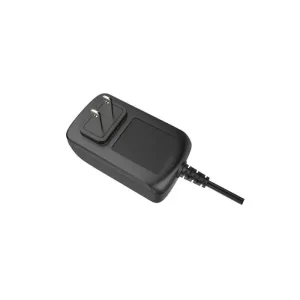
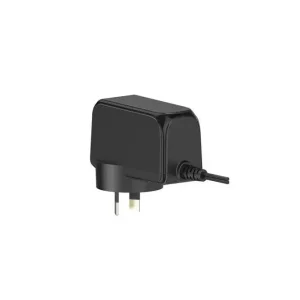
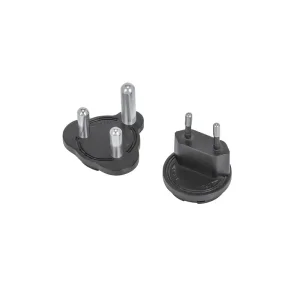
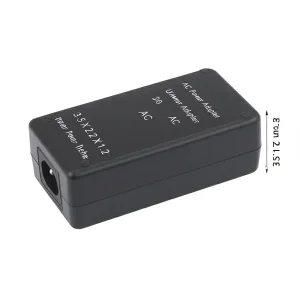
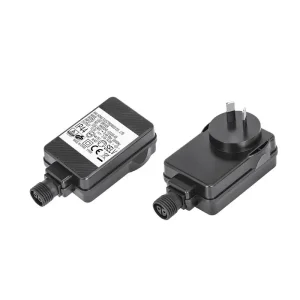
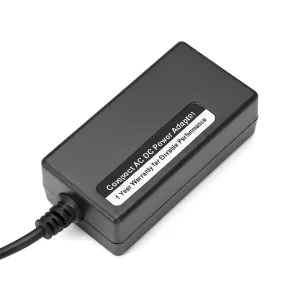
Whether you require a custom constant-voltage IP67 driver for architectural linear lighting, a specialized D4i constant-current street module, or OEM desktop adapters with universal international approvals, our Shenzhen and Shaanxi engineering facilities stand ready to optimize your power chain.