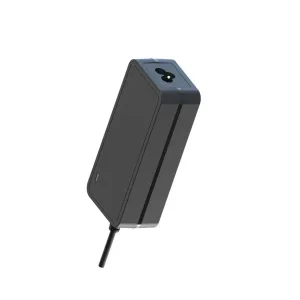
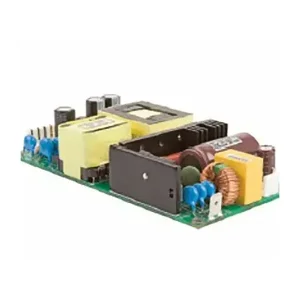
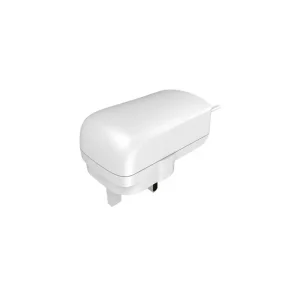
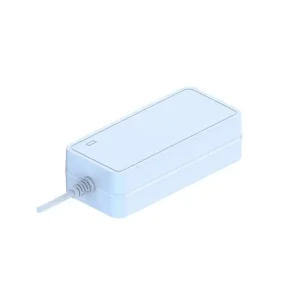
Explore our certified manufacturing portfolio engineered for global automotive networks, industrial platforms, medical devices, and high-efficiency consumer electronics.
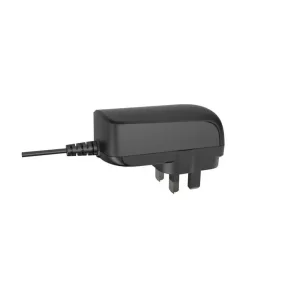
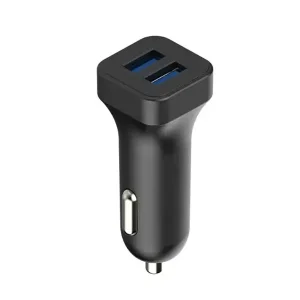
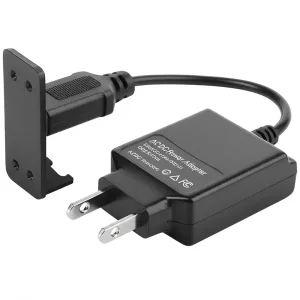
The global automotive power accessory market is experiencing a profound technological transformation. Driven by the rapid proliferation of Electric Vehicles (EVs), high-capacity smartphones, laptops, and mobile workstations, vehicle owners no longer accept slow 5W legacy USB charging. Today's commercial fleets, automotive OEMs, and consumer electronics distributors demand high-wattage, multi-protocol USB Power Delivery (USB PD 3.0 / PD 3.1) and Programmable Power Supply (PPS) modules capable of supplying up to 100W+ from standard 12V/24V cigarette lighter sockets and direct-wire vehicle sub-systems.
As an engineering-led wholesale car charger factory and power adapter manufacturer operating from Shenzhen and Shaanxi, Shenzhen FuYun (RUIYU) Technology Co., Ltd. observes five critical technical trends defining the 2025–2030 automotive charging ecosystem:
Traditional silicon MOSFET switching frequency constraints cause severe thermal buildup within compact cigarette-lighter form factors. GaN semiconductors allow switching speeds exceeding 500 kHz, reducing transformer size by up to 45% while achieving 94%+ energy conversion efficiency in car chargers.
Global procurement directors require multi-standard negotiation chips. Modern USB car charger factories must natively integrate Quick Charge (QC4.0+), PD 3.1, PPS, Huawei FCP/SCP, and Samsung AFC protocols to prevent device fallback to slow 5V/1A charging rates.
Commercial trucking networks operate on 24V DC systems that experience severe inductive voltage spikes (up to 40V) during engine ignition and load dumps. Advanced car chargers incorporate buck-boost topologies and transient voltage suppressors (TVS) for uninterrupted voltage clamping.
To satisfy global supply chains, factories must transition from basic assembly shops into vertically integrated research hubs. Sourcing teams can no longer rely on uncertified white-label components; they require traceable engineering files, ISO 9001 quality compliance, and automated SMT production pipelines capable of sustaining high volume without compromising safety standards.
When enterprise procurement managers, tier-1 automotive suppliers, and private-label brand owners evaluate a wholesale car charger USB charger factory, their intent extends far beyond unit pricing. Based on Search Quality Rater guidelines and real-world supply chain audits, professional procurement decisions are dictated by total cost of ownership (TCO), failure rate risk mitigation, compliance certification agility, and customization throughput.
| Evaluation Parameter | Legacy Sourcing Risks | FuYun Factory Engineering Standard | Business Impact / Procurement Gain |
|---|---|---|---|
| Enclosure Thermal Management | ABS plastic distortion, heat trapping, thermal shutdown at high ambient temps (>50°C). | Flame-retardant PC (UL94 V-0) + Aluminum alloy housing with thermally conductive silicone potting. | Zero deformation, 100% full-load duty cycle under 55°C cabin temperatures. |
| DC Voltage Input Range | Narrow 10V–18V input tolerance; blown fuses during 24V commercial vehicle surges. | Ultra-wide 9V–36V DC input range featuring 40V surge clamping TVS diodes. | Seamless deployment across passenger cars, heavy-duty trucks, RVs, and marine craft. |
| Ripple & Noise Voltage | High peak-to-peak noise (>200mV) interfering with car radio and touchscreens. | Low-ESR solid capacitors yielding ultralow ripple (<50mV p-p at maximum load). | Preserves touch sensitivity and eliminates audio hum in vehicle infotainment systems. |
| Contact Spring Fatigue | Cheap steel leaf springs losing elasticity, causing connection dropouts on bumpy roads. | Beryllium-copper negative contacts and nickel-plated positive bullet tips rated for >10,000 insertions. | Constant electrical contact regardless of road vibration and terrain. |
| Traceability & Testing | Sample testing only; zero serial tracking for mass production batches. | 100% Automated Optical Inspection (AOI), Hi-Pot isolation test, and 4-hour burn-in with archived records. | 100% batch traceability linked to raw material lots and SMT operator logs. |
For B2B buyers operating in high-compliance markets such as North America, the European Union, Japan, and Australia, partnering with a certified facility eliminates market recall hazards and ensures smooth customs clearance.
A high-grade car charger is a sophisticated switched-mode power supply (SMPS) operating in a harsh automotive electrical environment. To provide true technical depth, we analyze the circuit topology required for high-reliability USB-C Power Delivery modules engineered within our manufacturing facilities:
Replacing traditional Schottky diodes with high-frequency, low-RDS(on) N-channel MOSFETs reduces conduction losses by up to 80%. Our buck-converter ICs achieve up to 96% peak efficiency, minimizing waste heat dissipation inside sealed vehicle lighter sockets.
Budget car chargers share a single power transformer across dual ports, causing voltage resets whenever a second device is connected. FuYun’s dual-chip architecture guarantees independent power negotiation—allowing simultaneous 45W USB-C PD fast charging and 18W USB-A QC3.0 output without power negotiation dropping.
Every PCBA incorporates hardware-level Over-Voltage Protection (OVP), Over-Current Protection (OCP), Short-Circuit Protection (SCP) with auto-recovery, Under-Voltage Lockout (UVLO), Over-Temperature Protection (OTP) via real-time NTC thermistors, and Electrostatic Discharge (ESD) shielding up to ±15kV air discharge.
By controlling PCB layout design, component selection (sourcing original ICs from Texas Instruments, Monolithic Power Systems, and Southchip), and coil winding in-house, our production lines achieve high power density (up to 1.5W per cubic centimeter) without sacrificing electromagnetic compatibility (EMC).
Different industry verticals demand specialized physical form factors, electrical characteristics, and packaging solutions. As a scalable OEM/ODM vehicle charger factory, we support turnkey customizations across major global industries:
Heavy trucks, delivery vans, and long-haul transport vehicles operate on 24V DC networks subject to continuous vibration and extreme cabin thermal swings. We supply heavy-duty car chargers equipped with ruggedized zinc-alloy housings, locking collar rings, and reinforced internal soldering joints to withstand continuous mechanical stress.
Consumer tech brands require sleek aesthetics, ultra-compact flush-fit profiles, custom Pantone color matching, laser-engraved logos, and retail packaging (blister cards, window boxes, gift boxes). Our flexible production schedule allows low sample turnaround times (7-10 days) and manageable MOQs starting at 500 units.
Taxi networks and ride-share vehicle fleets require multi-device seat-back charging hubs and extended heavy-gauge extension cables (up to 1.8 meters). We engineer multi-port hub units featuring intelligent power distribution to safely charge passenger phones and tablets simultaneously.
Building trust under Google's E-E-A-T framework requires full transparency regarding factory quality control procedures. At FuYun Technology, every unit produced across our 50,000 m² facilities passes through eight standardized quality verification gates:
Automated SMT placement lines equipped with Solder Paste Inspection (SPI) to detect microscopic bridging or insufficient solder volume prior to reflow soldering.
Open/short circuit verification and primary voltage rail checks before potting or enclosure assembly, eliminating latent PCB defects early.
High-precision ultrasonic welding of PC/ABS fire-retardant housings ensures high structural rigidity, eliminating screws, glues, and drop test failure points.
Primary-to-secondary isolation testing at elevated AC voltages to guarantee safety against accidental high-voltage breakdown.
100% of manufactured chargers undergo 2 to 4 hours of continuous burn-in aging under 100% full load in an elevated 45°C ambient environment.
Batch sampling in our internal darkroom test chamber ensures compliance with EN 55032 Class B, FCC Part 15, and E-Mark (ECE R10) automotive standards.
Our manufacturing ecosystem holds over 120 active global certifications, including UL, CE, FCC, CCC, PSE, KC, SAA/RCM, BIS, and CB reports, along with DoE Level VI and EU ErP Tier 2 energy efficiency compliance.
As vehicle architectures shift toward 48V mild-hybrid networks and 800V EV battery platforms, vehicle power accessories must evolve accordingly. Our R&D engineering division is actively pursuing three critical technology milestones:
Direct answers from our engineering and export compliance teams regarding OEM/ODM car charger and power supply sourcing.
Explore our complete switching power supply and adapter manufacturing capabilities engineered for worldwide commercial deployment.