Fully certified OEM power conversion systems engineered for extreme thermal endurance, precise load regulation, and multi-protocol rapid charging.
The global automotive fast mobile charger manufacturing domain is undergoing a fundamental structural transformation driven by electrification, the electrification of cabin amenities, and the high-wattage computing requirements of modern smart devices. As consumer mobile electronics transition from standard 5V/2.4A USB-A interfaces to high-density USB Power Delivery (USB PD 3.1 Extended Power Range up to 240W), original equipment manufacturers (OEMs) and Tier-1 automotive aftermarket distributors face stringent technical challenges.
Vehicle electrical architectures operate on nominal 12V DC (passenger cars) or 24V DC (heavy commercial transport) bus systems. Bridging these wide input DC rails to dynamic, multi-voltage outputs (5V, 9V, 12V, 15V, 20V, and 28V/36V/48V under PD 3.1 EPR protocols) requires sophisticated synchronous buck-boost topology design. As a specialized wholesale car fast mobile charger manufacturer, Shenzhen FuYun (RUIYU) Technology addresses the crucial engineering trade-offs between electromagnetic compatibility (EMC), thermal mitigation, and form-factor miniaturization.
In global wholesale procurement, tier-one sourcing managers demand verifiable E-E-A-T (Experience, Expertise, Authoritativeness, and Trustworthiness) standards. Cheap, non-compliant automotive chargers present significant hazards: load dumps, voltage spikes, switching noise interference with DAB radio/GPS telemetry, and thermal runaway within enclosed dashboard accessory sockets.
Engineering-led manufacturing facilities like FuYun maintain complete vertical integration across 50,000 m² of ISO 9001-certified production space. From planar transformer winding and Surface Mount Technology (SMT) PCBA assembly to automated optical inspection (AOI) and 100% full-load burn-in ageing under high-temperature ambient conditions, our rigorous production SOP guarantees zero-defect deliveries to brands across North America, Europe, Japan, and Australia.
Replacing conventional Silicon MOSFETs with Gallium Nitride (GaN) field-effect transistors dramatically reduces switching losses and gate charge. This allows switching frequencies to exceed 500 kHz to 1 MHz, cutting inductor volume by 40% while achieving peak energy efficiency of 95.5% under heavy load.
Vehicle electrical systems generate severe transients (Pulse 1, 2a, 3a, 3b, and ISO 16750-2 Load Dump Pulse 5b up to 100V). Our internal PCB layouts incorporate heavy-duty Transient Voltage Suppressor (TVS) diodes and active over-voltage clamp ICs to protect downstream consumer devices.
Integrated fast charge protocol ICs automatically negotiate handshake standards across USB PD 3.0/3.1, PPS (Programmable Power Supply), Qualcomm QC5.0, Huawei FCP/SCP, Samsung AFC, and Apple 2.4A, optimizing output voltage in 20mV increments for minimum power loss.
Different automotive environments require specific enclosure profiles, connector pinouts, and thermal management approaches. Our manufacturing framework covers multiple application categories.
Compact, flush-fitting dual USB-C/USB-A cigarette lighter adapters designed to fit seamlessly inside center console armrests. Features low EMI operation to preserve Bluetooth, AM/FM, and keyless entry radio signals.
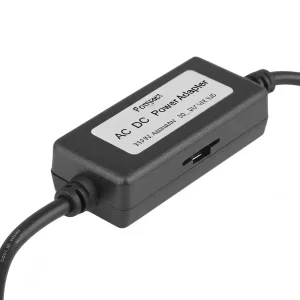
Heavy-duty power adapters with extended input tolerance (up to 36V continuous DC), customized strain-relief cabling, and high-wattage power delivery for rugged tablet mounting stations in long-haul transport trucks.
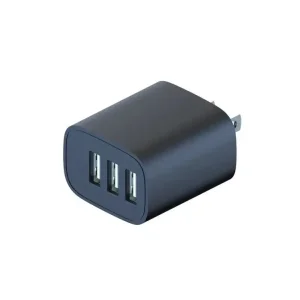
Multi-port, passenger-facing charging hubs with flame-retardant PC/ABS (UL94 V-0 standard) enclosures, over-current protection per port, and LED ambient illumination for high-frequency public usage.
As power densities exceed 2.5 Watts per cubic centimeter inside tiny automotive accessory plugs, heat dissipation becomes the primary factor limiting service life. FuYun utilizes ultra-high thermal conductivity silicone potting compounds (k > 1.5 W/m·K) combined with aluminum alloy heatsinks. This structure ensures that component junction temperatures stay below 105°C even during continuous multi-device charging under a 50°C cabin sun exposure.
Furthermore, dynamic thermal throttling firmware monitors NTC thermistors on the PCBA, adjusting output wattage seamlessly rather than abruptly shutting off charging when thermal limits are approached.
Next-generation electric vehicles are transitioning from 400V to 800V main traction batteries. The internal low-voltage accessory bus is evolving into smart distributed DC-DC networks. FuYun’s engineering roadmap includes high-voltage direct-step-down auxiliary power modules, enabling ultra-fast charging ports connected directly to auxiliary vehicle batteries with minimal conversion losses.
Our R&D team continuously refines active EMI filtering to meet CISPR 25 Class 5 automotive standards, ensuring total electromagnetic compatibility with on-board radar, LiDAR, and infotainment systems.
A decade and a half of continuous manufacturing evolution, expanding from specialized circuit design to an enterprise power ecosystem.
Shenzhen Haoshuo Tec Co., Ltd. was established as an R&D engineering house focusing on high-efficiency switching power supply topologies and custom magnetics.
Expanded into proprietary SMT production lines and gained direct vendor qualification for European telecom operators for set-top box power supply units.
Achieved mass supply qualification for Hama (Germany) and integrated into the Xiaomi ecosystem via Zhimi technology, proving high-volume batch consistency.
Passed BSCI social audits, clearing integration into Walmart’s retail supply matrix. Established Sanyang Ruiyu and Shaanxi Ruitonglong secondary manufacturing bases.
Launched high-wattage GaN vehicle fast charger lines and intelligent power modules for commercial cleaning robotics, backed by 120+ international certifications.
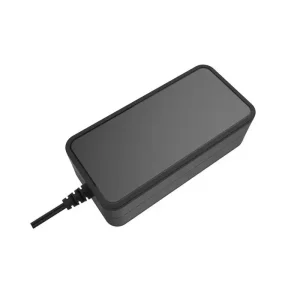
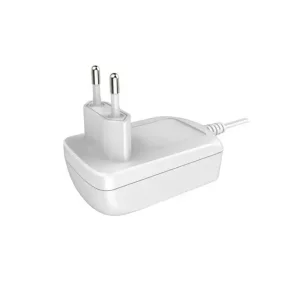
Explore our complete range of certified power solutions, from desktop switching supplies to wall-mount fast chargers.
Essential questions answered by our chief power supply engineers for OEM sourcing managers and brand procurement directors.
Our automotive fast chargers incorporate multi-stage LC input filters, shielded common-mode chokes, and optimized four-layer PCB grounding planes. Switching frequencies are intentionally modulated using spread-spectrum clocking techniques to prevent peak RF energy accumulation. This design guarantees full compliance with CISPR 25 Class 3/Class 5 radiated and conducted emission thresholds, protecting car radios, GPS navigation, and ADAS telemetry.
Standard housing configurations with custom laser-engraved logos or silkscreen branding start at an accessible 500 pcs per model. For bespoke injection-moulded enclosures tailored to proprietary dashboard geometries, we typically recommend a first order batch of 3,000 pcs to optimize tooling amortisation and SMT line setup costs efficiently.
Every single output port is monitored by a hardware microcontroller running proprietary battery health firmware. The charger executes precise constant-current (CC) to constant-voltage (CV) transitions, switching to trickle charge as the connected phone or tablet reaches 80% state of charge (SoC). Hardware protection includes Over-Voltage Protection (OVP), Over-Current Protection (OCP), Short-Circuit Protection (SCP), and dual-NTC Over-Temperature Protection (OTP).
Engineering prototypes utilizing our qualified platform library are dispatched within 7 to 10 business days. Custom PCB modifications or new circuit layout approvals require 15 to 20 days. Volume mass production timelines typically range between 20 to 30 calendar days following final golden sample sign-off, accompanied by complete batch inspection reports.
We employ a multi-tier thermal dissipation strategy: utilizing GaN III-V power switches to lower operational heat generation, encapsulating high-frequency inductors in thermal potting gel, and utilizing double-thick copper PCB trace layers (2oz Cu). Outer shells are crafted from high-temp flame-retardant PC (UL94 V-0 rated) or anodized aviation aluminum alloy for optimal heat transfer.