Discover our flagship range of regulated DC-DC converter modules, AC/DC switching power supplies, and fast-charging adapters built for rigorous industrial reliability.
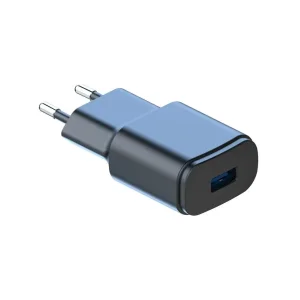
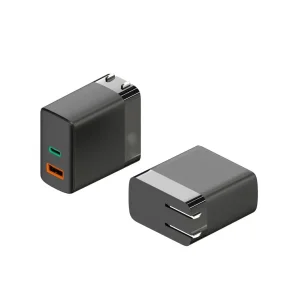
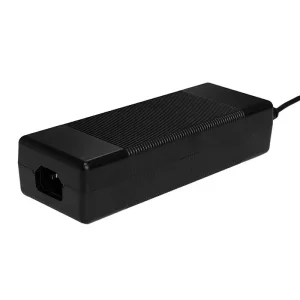
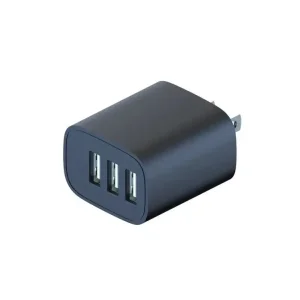
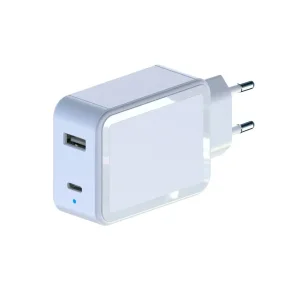
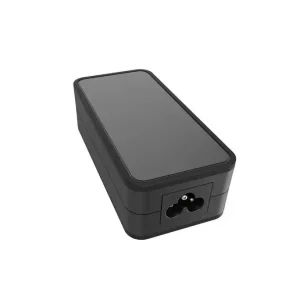
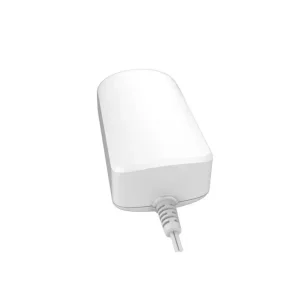
In modern electronic systems design, isolated DC-DC converters serve as the critical line of defense for signal integrity, human safety, and system resilience. Unlike non-isolated topologies that share a common continuous ground path between input and output, isolated converters deploy true galvanic isolation—typically utilizing planar transformers, optocouplers, or digital capacitive barriers—to prevent direct electrical current flow between circuits.
Protects sensitive secondary-side microcontrollers, DSPs, and end-users from destructive high-voltage transients, surges, and lethal grid faults (up to 3000VAC / 4242VDC dielectric strength).
Breaks noisy ground loops in multi-channel industrial networks (RS-485, CAN bus, Ethernet), preventing differential ground potential shifts from distorting precision analog measurements.
Efficiently steps up, steps down, or inverts wide input DC voltages (e.g., 9-36VDC, 18-75VDC, 400VDC-800VDC) into tightly regulated output rails (+3.3V, +5V, ±12V, ±15V, +24V, +48V).
Attenuates high-frequency switching noise (dv/dt spikes) generated by heavy inverter drives and SiC/GaN switches via low inter-winding capacitance transformer designs.
When selecting wholesale isolated DC-DC converter factories, power density (W/in³) and thermal dissipation are paramount. Advanced manufacturers like Shenzhen FuYun (RUIYU) Technology Co., Ltd. utilize multi-layer PCB planar transformers coupled with thermal potting encapsulants to achieve power conversion efficiencies exceeding 94%, while maintaining Class B EMI limits without external bulky LC filters.
Driven by global decarbonization, 5G deployment, electrification of transport, and Industry 4.0 automation, the global market for isolated DC-DC converters is expanding exponentially. Below is a breakdown of critical application sectors requiring wholesale OEM/ODM manufacturing capability.
| Industrial Sector | Typical Input / Output Rails | Isolation & Safety Standard | Key Technical Requirements |
|---|---|---|---|
| Electric Vehicles (EV) & HEV | 400VDC / 800VDC to 12VDC / 24VDC | AEC-Q100, ISO 26262 ASIL-D, 3000VAC | High power density, bi-directional energy flow, automotive vibration resistance (-40°C to +125°C). |
| Industrial Automation & PLC | 18–36VDC to 5VDC, ±15VDC | IEC/EN 62368-1, UL 508, 1500VDC | Din-rail mountable, zero-load stability, noise immunity against heavy motor contactors. |
| Telecom & 5G Infrastructure | 36–75VDC (-48V nominal) to 3.3V, 12V | Telcordia GR-1089, IEEE 802.3af/at/bt | 1/16th and 1/8th brick standard footprint, high efficiency at full load, conduction cooling. |
| Medical Equipment & Healthcare | 9–36VDC to 5VDC, 12VDC | IEC 60601-1 3rd Edition, 2xMOPP | Ultra-low leakage current (<2µA), 5000VAC reinforced isolation, 8mm creepage distance. |
| Renewable Energy & ESS | 150–1500VDC to 24VDC auxiliary | IEC 62109-1 (Solar PV), UL 1741 | Ultra-wide 10:1 or 12:1 input range, high surge withstand capability, conformal coating. |
In electric vehicles, isolated DC-DC converters step down high-voltage traction battery power (400V–800V) to low-voltage 12V/24V power networks for driving steering actuators, braking units, infotainment, and ECU logic. Galvanic isolation prevents hazardous high-voltage leakage into the passenger compartment chassis ground.
Telecommunication towers operating on standard -48VDC bus systems require high-reliability brick converters (Half-Brick, Quarter-Brick, Eighth-Brick) with isolation voltages up to 2250VDC to isolate outdoor antenna units from indoor digital switching racks.
Patient-connected devices such as ECG monitors, surgical lasers, and infusion pumps demand 2xMOPP (Means of Patient Protection) isolation. Wholesale manufacturers must guarantee dielectric strength of 5000VAC and working insulation capable of withstanding extreme voltage spikes.
Selecting the appropriate conversion topology is critical when designing custom isolated DC-DC modules for high-volume manufacturing. The table and analysis below compare dominant converter topologies applied in OEM factories:
Uses a coupled inductor (flyback transformer) to store energy during the switch ON period and transfer it to the output during the switch OFF period.
Transfers power directly across the transformer when the primary switch is ON. An active clamp circuit recycles leakage inductance energy.
Operates utilizing Zero Voltage Switching (ZVS) and Zero Current Switching (ZCS) across a resonant LC tank circuit to achieve peak power efficiency.
Established in 2010, Shenzhen FuYun (RUIYU) Technology Co., Ltd. is a vertically integrated power supply manufacturer spanning 50,000 m² across Shenzhen and Shaanxi production bases. From in-house magnetic transformer winding to SMT PCBA assembly and 100% full-load burn-in testing, we deliver end-to-end quality control.
Every isolated DC-DC converter and switching power adapter passes an 8-stage SOP: SMT Placement → Bare-Board Test → First Article Inspection → Ultrasonic Housing Welding → 100% 3000VAC Dielectric Hi-Pot Test → Thermal Burn-In Ageing → Final Functional Calibration → Automated Packaging.
Fully compliant with global regulatory regimes including UL/cUL (UL 62368-1), CE (EN 55032 Class B EMC), UKCA, CCC, PSE, KC, SAA/RCM, BIS, and CB schemes. Efficiency standards comply with US DoE Level VI and EU ErP Tier 2 eco-design directives.
Formally qualified into the Walmart global supply chain system (2020) and a long-term supply partner to Hama (Germany), European set-top box operators, and Xiaomi ecosystem enterprises (ZHIMI), proving our high batch-to-batch operational reliability.
As power conversion systems push toward higher efficiency and smaller form factors, four key technological disruptions are defining the future of isolated power module manufacturing:
Replacing legacy Silicon MOSFETs with Gallium Nitride (GaN) power switches and Silicon Carbide (SiC) diodes allows switching frequencies to surpass 1 MHz to 3 MHz. This drastically reduces planar transformer core size and passive filter capacitors, achieving power densities over 150 W/in³.
Modern industrial and data center power architectures demand digital control loops via PMBus or I2C interfaces. Engineers can dynamically program output voltages, adjust over-current trip thresholds, and real-time monitor module temperature, voltage, and current telemetry.
Traditional converters offered 2:1 or 4:1 input ranges. Next-generation isolated modules feature 10:1 (14V–160VDC) input windows tailored for railway applications (EN 50155 standard), surviving wide line fluctuations without requiring multiple discrete inventory part numbers.
Automated PCB planar magnetic transformer construction eliminates manual wire-winding variations. Combined with thermally conductive polyurethane or silicone potting, potted modules withstand extreme thermal shock (-40°C to +105°C) and harsh IP67 environments.
FuYun Technology provides full-turnkey ODM engineering services for client applications requiring custom voltage ratios, specific form factors, or specialized safety approvals.
Define input voltage envelope, output voltage tolerance, ripple limits (<30mVp-p), isolation rating (1.5KV–5KV), and efficiency target.
Our senior R&D team selects optimal topology (Active Clamp, Flyback, LLC), designs the planar magnetics, and conducts 3D DFM thermal simulations.
Precision SMT sample builds, PCB layout optimization for EMI Class B compliance, and pre-compliance safety testing in our internal laboratory.
Filing UL/CE/CB certification dossiers followed by high-volume automated line production with 100% serial number traceability.
Common technical questions answered by our Chief Power Electronics Engineers:
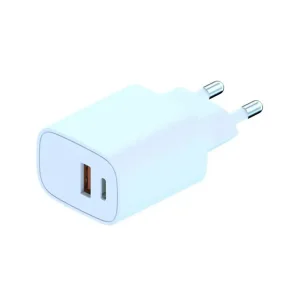
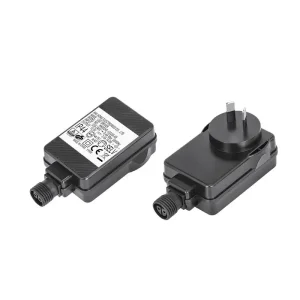
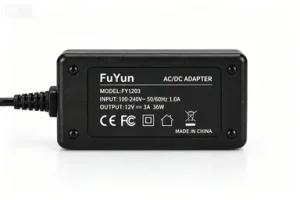
Explore additional certified switching power supplies and universal charging products available for wholesale volume distribution.
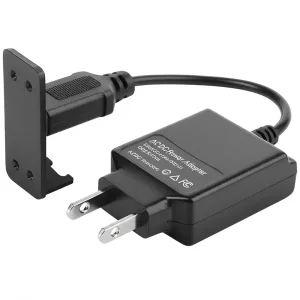
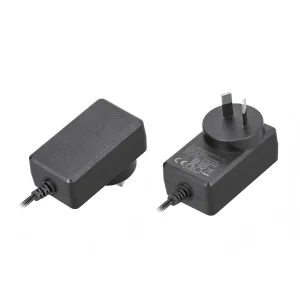
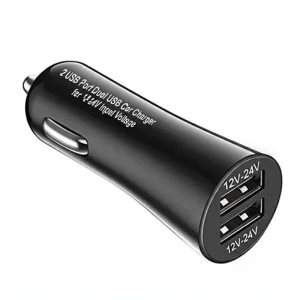
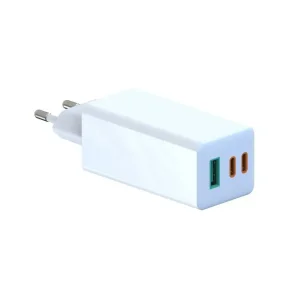
Need custom input voltages, planar magnetics design, or fast safety certification submission? Contact our engineering team today for instant technical evaluation and factory-direct pricing.