Verified factory-direct switching power supplies, universal travel adapters, and medical-grade power solutions built to international standards.
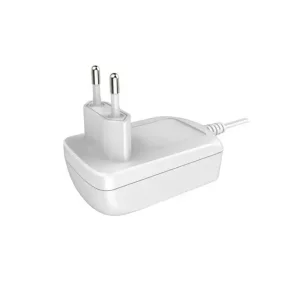
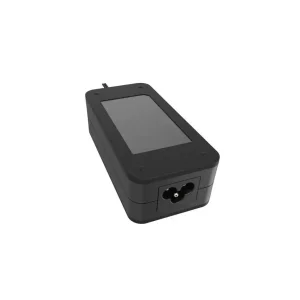
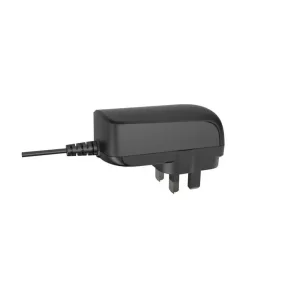
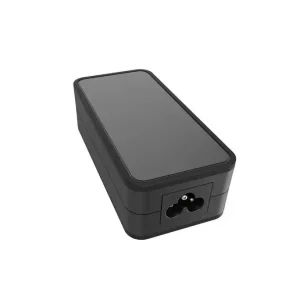
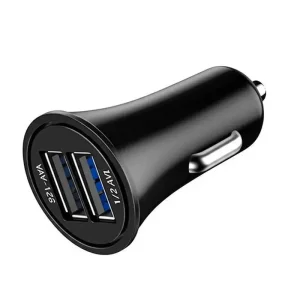
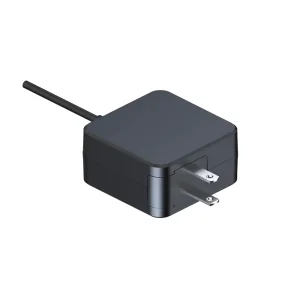
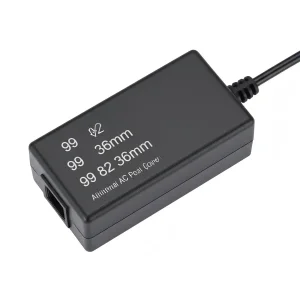
The global shift toward USB Type-C power delivery (USB-PD 3.0/3.1) and Gallium Nitride (GaN) power electronics has revolutionized the B2B landscape for power supply sourcing. Driven by international legislative mandates—such as the European Union’s Directive (EU) 2022/2380 enforcing a common charging interface—enterprises, brands, distributors, and original equipment manufacturers (OEMs) are forced to upgrade their power architectures. Sourcing high-efficiency Type-C wall chargers directly from certified Tier-1 manufacturing facilities in China provides brands with critical margin advantages, technological customization, and guaranteed compliance across global regulatory markets.
Information Gain Key Takeaway for B2B Buyers: A modern Type-C wall charger is no longer a passive accessory; it is an intelligent power subsystem governed by microcontrollers running dynamic Power Delivery (PD) protocols, precise thermal regulation loops, and active electromagnetic interference (EMI) filtering circuits. Sourcing decisions must weigh total cost of ownership (TCO) against long-term certification longevity.
The power adapter industry is experiencing a fundamental transition from legacy Silicon (Si) MOSFET Flyback topologies to wide-bandgap (WBG) Gallium Nitride (GaN) switch components. This transition enables drastically increased switching frequencies (from 65 kHz up to 500 kHz+), allowing transformers and passive passive components to shrink by up to 50% in volumetric footprint without sacrificing thermal performance.
Gallium Nitride on Silicon (GaN-on-Si) power ICs dramatically reduce Rds(on) and gate charge losses. This allows wall chargers ranging from 20W to 240W to maintain high power density (>1.5W/cm³) while eliminating bulky heat sinks.
Mandatory transition towards USB Type-C across the EU, North America, and India has eliminated proprietary barrel jacks. Chargers must now support universal voltage profiles from 5V/3A up to 48V/5A under USB-PD 3.1 Extended Power Range (EPR).
Modern procurement standards require strict adherence to US Department of Energy (DoE) Level VI and EU Code of Conduct (CoC) Tier 2 guidelines, requiring no-load standby power consumption to remain under 30mW to 75mW maximum.
Selecting the optimal circuit topology depends on output wattage, physical enclosure constraints, target thermal limits, and bill-of-materials (BOM) cost targets. The table below outlines standard switching topologies deployed across our manufacturing lines.
| Topology Matrix | Power Range | Typical Efficiency | Primary Advantages | Key Applications |
|---|---|---|---|---|
| QR Flyback (Quasi-Resonant) | 5W – 45W | 88% – 91% | Cost-effective, mature design, low EMI signature | Standard Mobile Wall Chargers, Smart Home IoT |
| ACF (Active Clamp Flyback) | 45W – 100W | 92% – 94% | Zero Voltage Switching (ZVS), ultra-compact transformer | Laptop Fast Chargers, Multi-Port USB PD Adapters |
| PFC + LLC Resonant Converter | 100W – 300W+ | 94% – 96.5% | Near-zero switching losses, extreme power density | High-Power Workstation Chargers, Industrial Adapters |
| Single / Multi-Port Buck-Boost | 20W – 140W | 91% – 95% | Dynamic voltage allocation per port (PPS control) | Multi-Port Type-C & Type-A Hybrid Chargers |
Modern Type-C wall chargers rely on dedicated physical layer controllers (e.g., Cypress/Infineon, Weltrend, Injoinic) that handshake protocols via the CC (Configuration Channel) pins. Supported protocols must include:
Sustained high power density generates localized heat flux. Tier-1 manufacturing safeguards structural integrity through multi-layer thermal mitigation strategies:
Type-C wall chargers and power adapters are deployed across vast business sectors. Customizing plug heads, enclosure rating, and safety insulation allows factory output to serve specialized niche applications worldwide.
Standardized 65W to 140W Type-C laptop chargers integrated into corporate environments, educational institutions, and remote-work employee kits. High reliability ensures low RMA failure rates in field deployment.
Strict compliance with IEC/EN 60601-1 standards. Featuring 2×MOPP (Means of Patient Protection) isolation barriers and leakage currents under 100µA for clinical monitoring devices and diagnostic equipment.
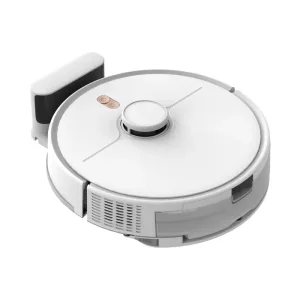
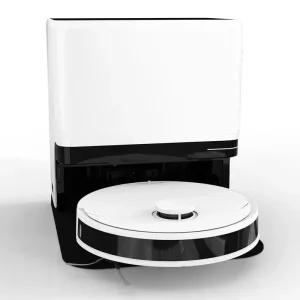
Dedicated high-voltage charging docks and power adapters supplying continuous power to intelligent vacuum cleaning robots, air purifiers, and home security monitoring hubs.
Exporting electrical devices across global jurisdictions requires navigating localized certification regimes. Sourcing from a factory with pre-approved technical construction files (TCF) significantly shortens time-to-market.
To eliminate early-life field failure rates, enterprise production lines employ rigorous automated quality control gates from component raw sourcing down to final carton packing.
Automated high-speed Surface Mount Technology (SMT) with 3D Solder Paste Inspection (SPI).
AOI scans 100% of PCBA boards for component bridging, tombstoning, and pin alignment.
Initial electrical validation confirming output voltage tolerances, load regulation, and ripple noise.
High-precision ultrasonic welding bonds flame-retardant (UL94 V-0) polycarbonate enclosure halves seamlessly.
High-voltage insulation stress test (3000V AC to 4000V AC primary-to-secondary) ensuring zero electrical breakdown.
Adapters undergo sustained thermal stress testing in elevated 45°C environmental burn-in chambers.
Automatic Test Equipment (ATE) checks OCP, OVP, SCP, OTP trigger thresholds across all USB PD profiles.
Final packaging validation including anti-static bag sealing, barcode verification, and drop resilience testing.
As device power demands scale up while spatial budgets decrease, factory R&D roadmaps are focusing on three primary technical vectors to redefine charger performance over the next decade:
Combining Gallium Nitride drive stages with Silicon Carbide (SiC) diodes allows high-voltage converters to exceed 240W in ultra-compact form factors, opening new doors for workstation power supplies and e-mobility charging.
Replacing traditional wire-wound transformers with multi-layer PCB planar transformers reduces winding profile height to under 10mm while improving inter-layer coupling efficiency and automated repeatability.
Future Type-C adapters will feature smart load balance algorithms capable of dynamically redistributing up to 140W across 4+ ports in real-time, matching peak charging curves without tripping thermal cutoffs.
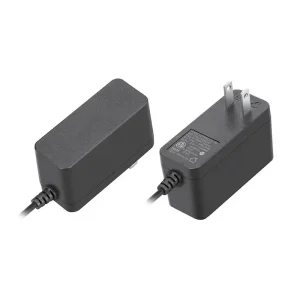
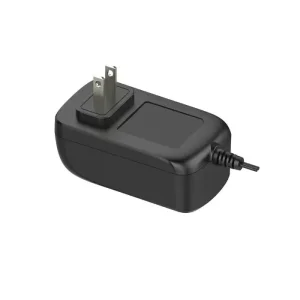
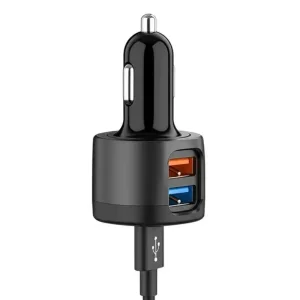
Explore our full platform offerings across wall-mount adapters, desktop power supplies, open-frame modules, and mobile chargers.
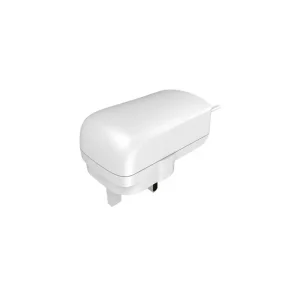
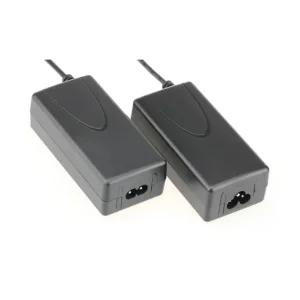
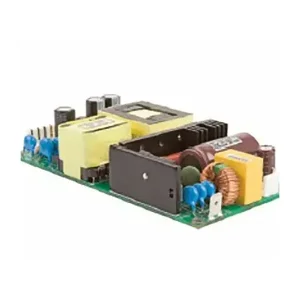
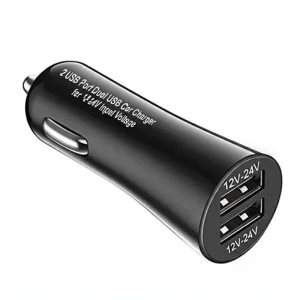
Detailed answers to critical technical, certification, and manufacturing inquiries faced by procurement teams.
Our standard Minimum Order Quantity (MOQ) for custom-branded Type-C wall chargers starts at 500 units per model for existing enclosure platforms. This MOQ ensures optimal tooling setup on automated Surface Mount Technology (SMT) and high-voltage burn-in testing lines. For fully bespoke plastic injection housings requiring new tooling molds, the recommended initial order quantity is 3,000 units to amortize NRE (Non-Recurring Engineering) mold expenses effectively.
Gallium Nitride (GaN) is a wide-bandgap semiconductor material that exhibits significantly lower electron resistance (Rds-on) and smaller parasitic capacitance than traditional Silicon (Si) MOSFETs. This allows GaN switches to operate efficiently at much higher frequencies (200kHz to 500kHz+). Consequently, passive magnetic components like transformers and capacitors shrink dramatically, allowing GaN chargers to offer up to 3x higher power density, lower operating temperatures, and peak thermal efficiency exceeding 95%.
Electrical prototyping built on established topologies typically takes 7 to 10 working days. Custom PCB design layouts incorporating specific dimensional requirements, unique pinouts, or specialized transformer winding structures require 15 to 20 business days. Following engineering sample approval and artwork sign-off, standard mass production lead times range from 20 to 30 calendar days depending on shipment volume and plug configuration.
Every power supply platform undergoes strict pre-compliance testing in our internal laboratory for EMC (EN 55032 Class B), electrostatic discharge (ESD), surge protection (up to 4kV), and dielectric isolation withstand. Official certifications including UL, cUL, CE, UKCA, CCC, PSE, KC, SAA/RCM, and CB reports are verified by accredited third-party laboratories (such as TÜV, SGS, and Intertek). Full technical construction files (TCF) are maintained for client audit compliance.
Yes. Our multi-port USB Type-C and Type-A hybrid chargers utilize intelligent microcontrollers (MCUs) that monitor real-time handshakes on the Configuration Channels (CC1/CC2). When multiple devices—such as a laptop and smartphone—are plugged in simultaneously, the MCU dynamically redistributes power (e.g., splitting a 65W total budget into 45W + 20W) without interrupting power delivery or triggering system reboots.
All power supply units come standard with five primary hardware protection layers: Over-Voltage Protection (OVP via secondary feedback latching), Over-Current Protection (OCP with auto-recovery hiccup mode), Short-Circuit Protection (SCP), Over-Temperature Protection (OTP using embedded NTC sensors), and Under-Voltage Lockout (UVLO). These protection loops safeguard both the power adapter and the connected host terminal.
We offer end-to-end OEM/ODM customization capabilities, including customized plastic housing colors, silk-screened or laser-engraved brand logos, bespoke retail packaging, custom AC plug configurations (US, EU, UK, AU, JP, CN, KR, IN), tailor-made DC cable lengths and wire gauges (AWG), specialized barrel jack tip dimensions, and custom output voltage/current programming within the controller firmware.