Explore engineered charging architectures manufactured across certified Shenzhen and Shaanxi industrial bases.
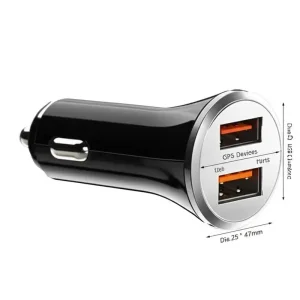
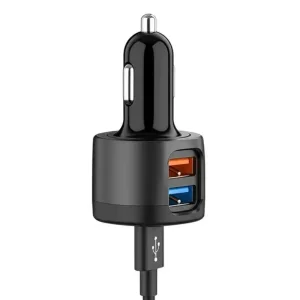
The convergence of modern fleet electrification, high-wattage mobile computing, and universal EU Type-C mandates has transformed the humble car charger into a critical mission-critical automotive component.
As corporate fleet operators, commercial transport networks, consumer electronic brands, and automotive OEMs accelerate their transition toward universal USB Type-C Power Delivery (PD 3.0 and PD 3.1 Extended Power Range standards), the requirement for high-reliability wholesale USB C car charger factories has reached an unprecedented high. Modern automotive in-cabin power architecture requires seamless handling of variable direct current (DC) inputs ranging from 12V in standard passenger vehicles to 24V/36V in commercial haulage trucks, delivery fleets, and maritime transport vessels.
Fleet operators require robust, industrial-grade USB-C power delivery hubs capable of charging telematics tablets, ruggedized mobile computers, and driver smartphones continuously under severe vibration and thermal fluctuations without power throttling.
The European Union's Common Charger Directive (Directive 2022/2380) and global environmental standards dictate the phase-out of legacy USB-A ports in favor of high-efficiency USB-C ports, necessitating rapid OEM retrofit programs across automotive supply chains.
Modern mobile workforces demand 65W, 100W, and up to 140W PD fast charging directly from vehicle accessory sockets to power power-hungry laptops, drones, and medical field devices while on the road.
Inside the engineering matrix of a enterprise-grade wholesale USB-C car charger manufacturing facility.
Traditional silicon MOSFET-based car chargers suffer from significant switching losses and excessive heat dissipation when bucking high input voltages (e.g., 24V truck batteries down to 5V/9V/15V/20V USB-C outputs). Our advanced USB C car charger factory integrates third-generation Gallium Nitride (GaN) power ICs featuring integrated gate drivers.
By elevating switching frequencies from 100 kHz up to 1.5 MHz, GaN technology drastically shrinks the physical footprint of planar transformers and output inductors by up to 60%, maintaining structural temperature rises below 35°C even under sustained 100W full-load performance.
In dual-port or multi-port USB-C car charger configurations, managing power allocation dynamically without dropping active charging sessions is critical. Our proprietary Microcontroller (MCU) firmware interfaces with hardware protocol chips supporting USB PD 3.1 EPR (Extended Power Range), Programmable Power Supply (PPS), Qualcomm QC 5+, Apple 2.4A, and Huawei FCP/SCP.
When a second device is connected, the intelligent load sharing algorithm re-negotiates power delivery contracts within milliseconds, protecting sensitive consumer electronics from transient voltage spikes or abrupt current collapses.
Vehicle dashboards are crowded electro-magnetic environments containing GPS antennas, FM/AM radios, Keyless Entry systems, and CAN-bus telemetry nodes. Cheap car chargers generate harsh High-Frequency Electromagnetic Interference (EMI), disrupting vehicle electronics.
Our manufacturing engineering embeds 2-stage LC differential filters, common-mode chokes, and shielded aluminum-alloy enclosures. Every wholesale production batch passes rigorous CISPR 25 Class 5 automotive EMC compliance testing, ensuring zero interference with on-board wireless communications.
| Technical Metric | Consumer Retail Grade | Industrial & Fleet Grade (Our Factory Standard) | System Impact |
|---|---|---|---|
| Primary Semiconductor | Standard Silicon MOSFETs | Navitas / GaN Systems GaNFast ICs | +40% Power Density, -30% Heat Generation |
| Input Protection Topology | Single Glass Fuse | TVS Diode + OVP IC + Self-Recovery PTC | Suppresses 100V Load Dump Voltage Spikes |
| Operating Temperature | -10°C to +40°C | -40°C to +85°C (Automotive Grade 2) | Prevents Thermal Shutdown in Desert Conditions |
| MTBF Reliability Rating | 10,000 Hours | > 50,000 Hours Continuous Output | Reduces Total Cost of Ownership (TCO) |
| Housing Flame Retardancy | ABS Standard Plastic | UL94 V-0 Polycarbonate + Anodized Aluminum | Self-Extinguishing Fire Safety Protection |
Inside our ISO 9001 and IATF 16949 compliant production facility in Shenzhen.
Fully automated Yamaha SMT lines place micro-components, MOSFETs, and GaN ICs with micron-level positional accuracy, followed by 3D Solder Paste Inspection (SPI).
Every PCBA undergoes multi-angle 3D visual scanning to detect micro-bridging, missing components, cold solder joints, or component misalignment before pot encapsulation.
Mating plastic and metal housing components are fused together utilizing high-frequency ultrasonic energy, forming a seamless, tamper-proof seal without messy glues or structural degradation.
100% of manufactured units are mounted into automated burn-in racks, operating at maximum rated power (e.g., 65W/100W) in elevated thermal chambers (45°C) for 4 to 12 hours straight.
How our R&D center is pioneering the next decade of mobile automotive power conversion systems.
With the release of the USB PD 3.1 specification enabling up to 48V/5A output, future in-cabin car chargers will move beyond laptops to power high-draw power tools, electric scooters, portable fridges, and outdoor life-support systems directly through standard DC cigarette lighter sockets and custom hardwired vehicle channels.
Future iterations of our wholesale car chargers will embed machine-learning algorithms on micro-controllers to monitor connected device battery degradation rates, adjusting voltage steps dynamically based on ambient vehicle temperature and device heat signatures to prolong lithium-ion battery lifespans by up to 30%.
As Electric Vehicles (EVs) become dominant, in-vehicle accessory ports will integrate bi-directional DC-DC converters, allowing USB-C devices to feed telemetry data or emergency back-up energy back into low-voltage auxiliary car battery networks when necessary.
Eliminating regulatory hurdles for brand owners, importers, and original equipment manufacturers.
Exporting automotive electronics globally requires strict adherence to regional regulatory frameworks. Partnering directly with our qualified OEM/ODM car charger factory guarantees that your products arrive backed by complete technical construction files, laboratory test reports, and active compliance marks:
Mandatory UN European automotive safety standard confirming that the electronic sub-assembly (ESA) does not cause electromagnetic disturbances or succumb to RF interference from nearby vehicles.
Comprehensive electromagnetic compatibility verification preventing unwanted radio frequency emissions, ensuring full compliance for retail entry across North America and Europe.
North American standard for vehicle battery adapters and international safety standards for audio/video, information, and communication technology equipment.
Environmentally safe manufacturing ensuring components are 100% free from heavy metals, lead, cadmium, hazardous phthalates, and restricted flame retardants.
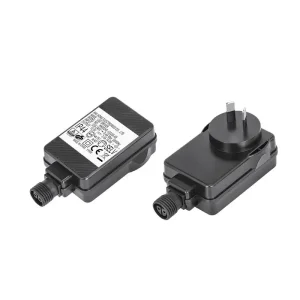
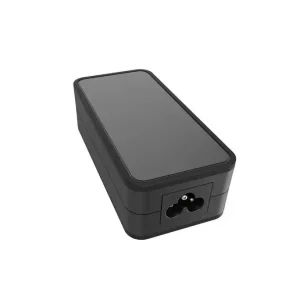
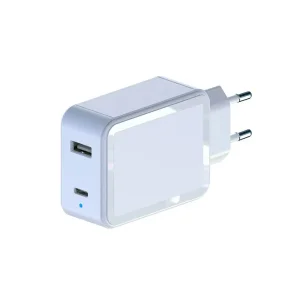
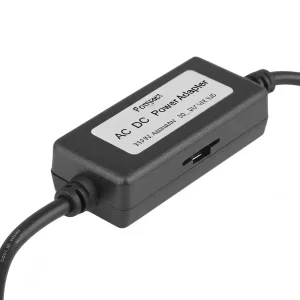
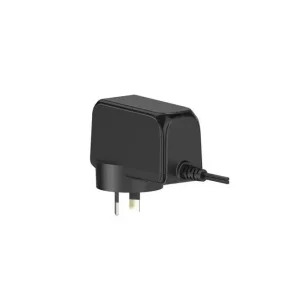
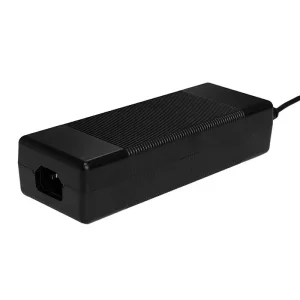
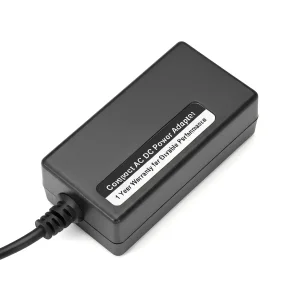
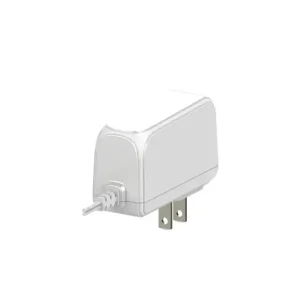
Explore our full range of AC/DC desktop, wall-mount, travel, and specialized power adapters.
Expert insights provided by senior automotive electronics engineering managers.
For standard catalog models using our existing tooling and enclosures, the MOQ starts at 500 units per order batch. For custom tooling (bespoke shell shapes, laser-engraved branding, customized LED halo rings, or customized PCB layouts), the initial order threshold is typically 3,000 units to offset tooling set-up and automated SMT line calibration costs.
Commercial 24V truck batteries experience voltage surges (load dumps) up to 100V when heavy inductive loads (like starter motors) disconnect. Our factory implements high-power Transient Voltage Suppression (TVS) diodes paired with dedicated input Over-Voltage Protection (OVP) ICs that clamping dangerous voltage spikes within nanoseconds, isolating the delicate downstream USB-C power conversion ICs.
Yes, our in-house firmware development team can program custom Power Delivery PDOs (Power Data Objects) and PPS (Programmable Power Supply) voltage/current steps into the onboard protocol controller. Whether your device requires 9V/3A, 15V/3A, 20V/5A, or specific non-standard voltage rails for proprietary equipment, we can adjust firmware parameters before mass production.
Working prototypes built on standard platform topologies are delivered within 7 to 10 business days. Fully custom PCB developments with new injection-molded enclosures require 20 to 25 days for tooling creation, followed by 15 days for mass production upon final sample sign-off.
Our ISO 9001 quality management framework mandates strict incoming component inspection (IQC), automated SMT paste verification (SPI), post-solder 3D optical inspection (AOI), mandatory 100% full-load burn-in testing, and serialized batch tracking. Every single product unit retains traceable production logs for a minimum of 3 years.