Engineered for high-duty Brazilian kitchen appliances and power conversion consistency. Direct OEM export platforms from ISO9001 certified facilities.
Strategic industry insights for importers, retail brand owners, and OEM procurement managers operating in South America's largest consumer market.
Unlike unified grid countries, Brazil operates under a bifurcated electrical system. States like São Paulo, Rio de Janeiro, and Minas Gerais predominantly utilize 127V / 60Hz, whereas southern states (Santa Catarina, Rio Grande do Sul), the Federal District (Brasília), and northeastern regions utilize 220V / 60Hz. OEM suppliers must engineer robust dual-voltage topologies or offer localized stator windings (Copper Class 180°C insulation) capable of handling voltage fluctuations without thermal cutout during heavy puree processing.
Importing culinary motor appliances into Brazil mandates strict adherence to INMETRO Ordinance No. 148/2022 (replaces Portaria 371) based on international IEC 60335-1 and IEC 60335-2-14 standards. Crucial testing parameters include dielectric strength under tropical humidity conditions, mechanical splash-resistance (IPX7 blade shaft seals), and mandatory Selo de Ruído (IBAMA Noise Emission Labeling) to ensure acoustic output remains within comfortable domestic limits.
To succeed in Brazil, procurement teams should not merely source standard 230V European hand blenders. High humidity in coastal ports (Santos, Paranaguá) coupled with high ambient ambient temperatures requires anti-corrosive SUS304/SUS316 blade shafts, tropicalized PCB conformal coatings, and low-tolerance motor bushings that prevent oil oxidation during extended transit and warehouse storage.
A deep dive into motor dynamics, blade geometry, noise reduction, and attachment module ergonomics crafted for long operational lifespans.
Our HB series utilizes high-density 8830 / 8835 pure copper stator motors with embedded thermal cutoff fuses (130°C). Generating 600W to 1200W peak load capability, these motors process thick Brazilian recipes such as acai pulp, mandioca root, and heavy bean stews without experiencing rpm drops or rotor overheating.
Featuring proprietary anti-suction blade guard technology, our 4-wing stainless steel blades create a localized hydrodynamic vortex. This ensures continuous suction-free blending, preventing the bell foot from sticking to the bottom of deep cookware during soup emulsion.
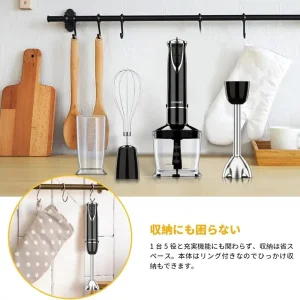
Equipped with a reinforced ABS/POM detachable loctal socket system. Allows seamless switching between the blending rod, 500ml stainless steel chopper bowl, egg whisk, and potato masher attachments within seconds while maintaining structural rigidity.
| Specification Parameter | Standard Household Tier | Commercial Heavy-Duty Tier | Brazil Customization Option |
|---|---|---|---|
| Rated Power Input | 600W - 800W | 1000W - 1200W | 127V / 220V 60Hz Tailored Winding |
| Motor Construction | CCA / Full Copper Copper Wire | 180°C Class H Pure Copper Stator | Custom Dynamic Balance Rotor |
| Speed Control System | 2-Speed Push Button | 12-Speed Dial + Turbo Pulse | Stepless Smart Touch Pressure Sensing |
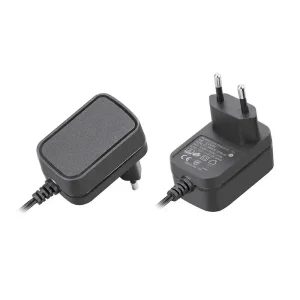
| Power Cord & Plug | EU 2-Pin (Type C) | Heavy-Duty Rubber Cable | ABNT NBR 14136 10A / 20A Plug |
| Blade Shaft Material | SUS 201 / SUS 304 | Food-Grade SUS 304 / SUS 316 | Titanium Nitride (TiN) Coating Option |
| Regulatory Approval | CE, RoHS, CB | UL, GS, LFGB, ETL | INMETRO + IBAMA Noise Label |
Designing multi-function hand blenders that fit the precise daily usage habits of Brazilian households and commercial foodservice venues (Lanchonetes, Pizzerias, Juice Bars).
Brazilian consumers frequently consume thick, partially frozen açai bowls and tropical fruit smoothies (Cupuaçu, Graviola). Standard blenders often stall when encountering ice crystals and dense pulp. Our high-torque DC motor platforms deliver high initial startup torque to shear through semi-frozen pulp smoothly without motor locking.
Homemade garlic mayonnaise (Maionese Caseira) is a staple across Brazilian Churrascarias and snack bars. The SUS304 quad-blade design provides high-shear micro-emulsification in seconds, ensuring stable fat-to-water binding without phase separation or oil splashing.
In high-volume Brazilian commercial kitchens, hand blenders are used continuously for pureeing heavy Feijoada black bean broths, cassava creams (Caldo de Mandioca), and guava paste (Goiabada). Our optional long-shaft 300mm immersion rods allow deep pot processing directly on commercial gas burners.
Pioneering future-ready kitchen appliance engineering through energy efficiency, smart motor controllers, and sustainable materials.
Transitioning from traditional brushed motors to Brushless DC (BLDC) technology. Yields 40% energy reduction, 50% weight reduction, and virtually silent operation under full load conditions.
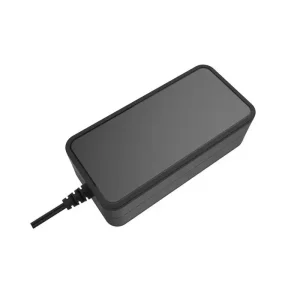
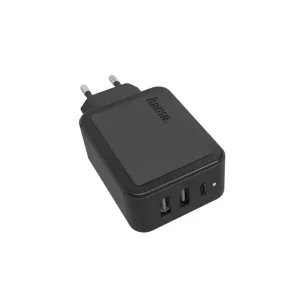
High-density 21700 lithium-battery platforms with USB-C PD fast-charging adapters, granting chefs full unethered mobility across kitchen islands and commercial outdoor catering events.
AI-assisted load sensing microcontrollers that automatically adjust motor rpm depending on food viscosity, preventing splatter while maximizing motor lifespan and gear train integrity.
Adopting Post-Consumer Recycled (PCR) food-safe polymers and 100% BPA-Free Eastar Tritan TX1001 for beaker accessories to satisfy global environmental social governance (ESG) standard metrics.
Optimizing Total Cost of Ownership (TCO), tariff barriers (II/IPI/ICMS taxes), and quality assurance for smooth import operations.
Importing fully assembled finished goods into Brazil frequently incurs elevated import duties (Imposto de Importação - II) and industrial taxes (IPI). As a flexible manufacturing factory, we offer Semi-Knocked Down (SKD) and Completely Knocked Down (CKD) packaging formats. This enables Brazilian distributors with assembly capabilities in Manaus Free Trade Zone (Zona Franca de Manaus - SUFRAMA) or local factories to import motor units and PCB modules at significantly reduced tariff rates.
Every single hand blender passing through our production line undergoes rigorous 6-stage testing:
1. IQC Motor Stator Resistance & Surge Test
2. 100% Hi-Pot Dielectric Isolation Guarding (1500V 1min)
3. No-Load & Full-Load Wattage/RPM Verification
4. Continuous 4-Hour Burn-in Thermal Test
5. Acoustic Noise Room Decibel Check (<75dB)
6. Master Carton Drop Test (ISTA-1A Standard)
Comprehensive technical and commercial answers tailored for Brazilian appliance brand managers and importers.
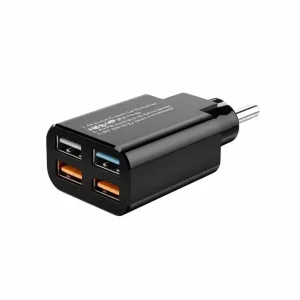
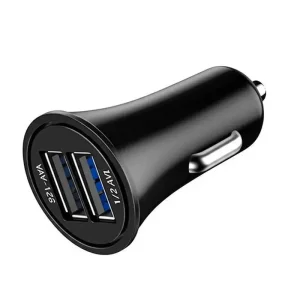
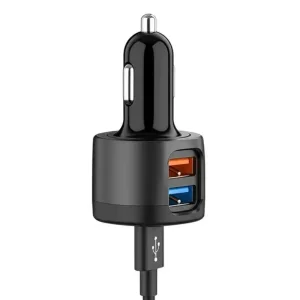
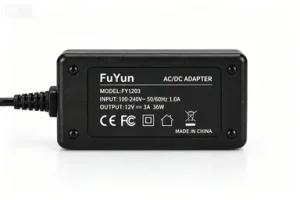
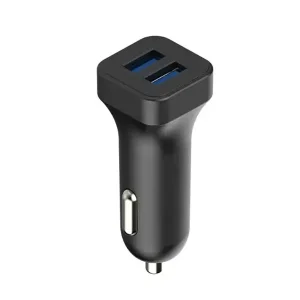
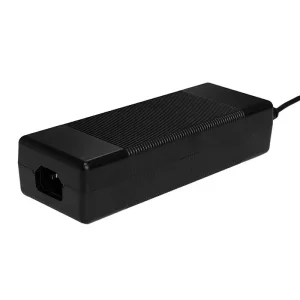
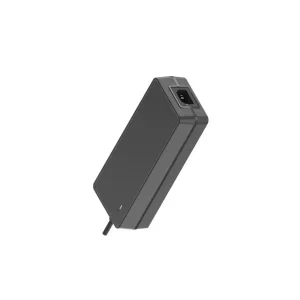
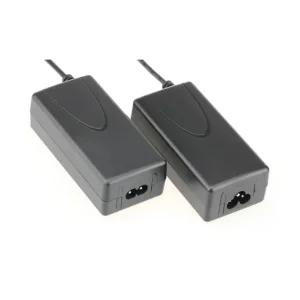
Explore our full catalogue of high-torque kitchen blenders, car power chargers, travel power systems, and high-efficiency switching power modules.
Ready to launch or expand your small appliance brand in Brazil? Request a formal quotation, INMETRO compliance documentation, or OEM sample kit within 24 hours.
Send Inquiry Now