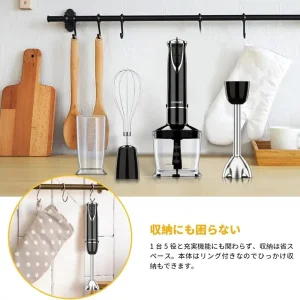
Engineered with heavy-duty copper motors, detachable drive sockets, and certified under ANZ Regulatory Compliance Mark (RCM) specifications for commercial importers, brands, and retail chains.
Analyzing market dynamics, regulatory compliance mandates, and shifting consumer/commercial purchasing criteria across Sydney, Melbourne, Brisbane, and Perth.
The Australian kitchen appliance ecosystem represents one of the most sophisticated market environments globally for small domestic appliances (SDAs) and commercial food preparation hardware. Driven by a vibrant hospitality sector—spanning over 50,000 cafes, bistros, and fine-dining establishments across New South Wales, Victoria, and Queensland—as well as a health-conscious residential demographic, the demand for Multi-Function Hand Blenders (commonly designated as immersion blenders or stick mixers) has experienced a fundamental transformation.
Historically viewed as basic pureeing tools, modern immersion blenders in the Australian market are now expected to operate as complete, modular food processing hubs. Importers, brand owners, and OEM procurement directors targeting major retail chains such as Harvey Norman, JB Hi-Fi, The Good Guys, and Kmart, as well as commercial catering suppliers like Chef's Warehouse, must navigate a complex convergence of consumer demands and rigid regulatory requirements.
To legally enter the Australian marketplace, all motorized hand blenders must undergo rigorous third-party testing to obtain the Regulatory Compliance Mark (RCM) and be registered on the Electrical Equipment Safety System (EESS) national database. Testing standard AS/NZS 60335.2.14 governs the safety of electric kitchen machines, imposing strict criteria for creepage distance, dielectric strength, motor enclosure IP ratings (minimum IPX7 for immersion wands), and flame-retardant housing materials compliant with UL94 V-0.
How advanced motor topologies, smart power management, and advanced metallurgy are redefining high-performance immersion blending.
Replacing traditional AC universal motors with high-efficiency BLDC drives delivers up to 300% longer operational life, eliminates carbon brush wear, reduces operational noise below 62 dB, and provides constant torque output even when processing high-viscosity food mixtures.
Embedded microcontrollers monitor current draw 500 times per second. When resistance increases (e.g., crushing ice or raw root vegetables), the system automatically modulates pulse-width modulation (PWM) power to maintain constant blade velocity without stalling.
Laser-welded SUS316 stainless steel blades coated with Titanium Nitride (TiN) provide exceptional hardness (Vickers > 2200 HV) and acid resistance. Computer-modeled bell housing geometry creates active anti-suction vortex action to reduce user fatigue.
| Engineering Specification | Standard Consumer Grade | Prosumer / Heavy Retail | Australia Commercial Grade |
|---|---|---|---|
| Motor Topology | AC Universal Motor (5420/5430) | High-Voltage DC Motor (7512) | Digital BLDC Motor Core |
| Peak Power Input | 400W - 600W | 800W - 1000W | 1200W - 1500W Equivalent |
| Blade Velocity (RPM) | 10,000 - 13,000 RPM | 12,000 - 16,000 RPM | 15,000 - 19,000 RPM (Variable) |
| Ingress Protection (Shaft) | IPX3 Standard Seals | IPX5 Dual-Lip Seals | IPX8 Triple Ceramic Shaft Seal |
| Duty Cycle Rating | 1 Min ON / 3 Min OFF | 3 Min ON / 2 Min OFF | 15 Min Continuous Duty |
| Noise Output (Full Load) | 78 dB - 85 dB | 70 dB - 74 dB | < 64 dB Whisper Drive |
| ANZ Regulatory Compliance | Basic RCM / EESS Level 1 | RCM / GEMS / EMC Class B | RCM / AS/NZS 60335.2.14 Commercial |
Combining automated SMT assembly, precision robotic winding, and 100% full-load traceably tested manufacturing to guarantee zero-defect shipments.
Sourcing high-reliability household and commercial appliances requires absolute transparency across the component supply chain. Our manufacturing facilities in Shenzhen and Shaanxi leverage fully integrated Industry 4.0 production architectures tailored specifically to handle high-mix, volume-flexible OEM/ODM contracts for Australian partners.
From automated surface-mount technology (SMT) for control board PCBA fabrication to ultrasonic housing welding and computerized dynamic balancing of high-speed armatures, every hand blender assembly undergoes rigid quality gates. Our proprietary MES (Manufacturing Execution System) assigns a unique serialized QR code to each unit, archiving hi-pot dielectric breakdown parameters, no-load current draw, and vibration frequency analysis for a minimum of 5 years.
Eliminating procurement risk with structured Australian localized support, customized packaging, and direct logistics to major Australian ports.
Complete OEM services including custom Pantone housing color matching, customized soft-touch rubberized coatings, laser-etched brand logos, and Australian retail-ready gift box design with ISTA-1A drop-test certified internal pulp packaging.
We supply full CB Test Certificates and RCM Test Reports issued by accredited laboratories (such as SGS, TUV, and Intertek), facilitating rapid EESS registration and clearance through Australian Customs and Border Protection.
To support your local Australian warranty policies (1-year to 5-year guarantees), we provide 1% FOC (Free of Charge) complete spare parts units or key modular components (blades, gearboxes, motors) with every mass production batch.
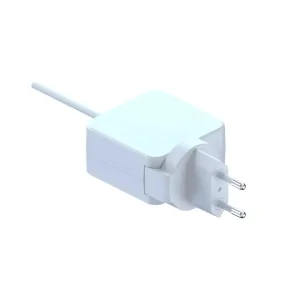
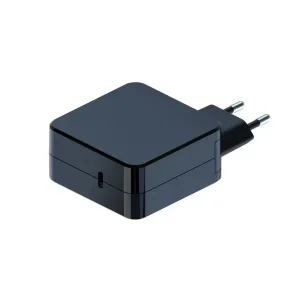
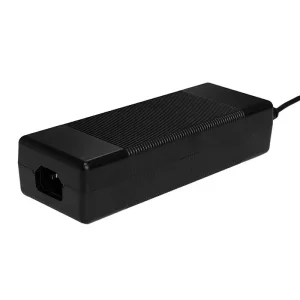
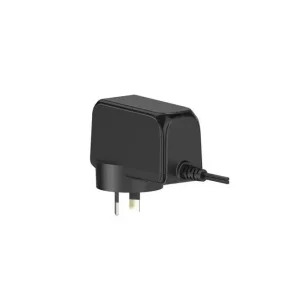
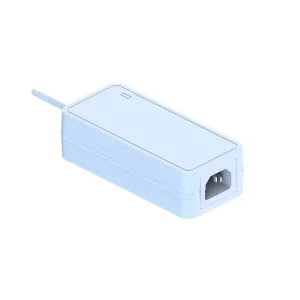
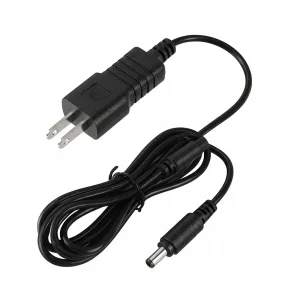
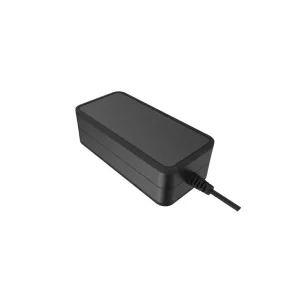
Explore our full range of certified immersion motors, variable speed stick mixers, power conversion bases, and high-efficiency attachments.
Addressing critical technical, regulatory, and logistics queries for hand blender wholesale sourcing.
For standard platform configurations utilizing our existing RCM-approved tooling and housing molds, our baseline MOQ starts at 500 units per model. For fully customized body color matching (Pantone), specialized rubberized grips, or bespoke accessory bundles, the standard production run is 1,000 to 3,000 units to ensure optimal cost amortisation on set-up tooling.
Every hand blender destined for the ANZ region undergoes testing against AS/NZS 60335.2.14 (electrical safety) and CISPR 14.1 / EN 55014 (EMC compliance). All food-contact parts, including stainless steel blending shafts (SUS304/SUS316), chopping bowls, and whisk wires, are tested for BPA-free, lead-free, and phthalate-free compliance under FDA 21 CFR and EU 10/2011 food contact regulations.
Engineering sample evaluation and golden sample sign-off typically require 7 to 10 business days. Mass production completes within 20 to 30 days after sample approval and deposit confirmation. Sea freight shipping from Shenzhen or Hong Kong ports to Sydney (Port Botany), Melbourne (Port of Melbourne), or Brisbane takes approximately 12 to 16 days transit time.
Yes. All units destined for Australia are fitted with certified AS/NZS 3112 mains plugs (either Class II non-rewireable 2-pin plugs or Class I 3-pin grounded plugs for metal-bodied commercial appliances) featuring insulated pins compliant with Australian safety amendments.
Our hand blenders feature dual micro-switches preventing thermal runaway, auto-resetting thermal cutoffs calibrated to 105°C, and patented double-lip liquid barrier gaskets along the lower drive shaft. Every production batch undergoes 100% dynamic high-voltage isolation testing and full-load motor torque verification.
Whether expanding your retail product line, upgrading commercial kitchen equipment offerings, or launching a bespoke private-label appliance range, our engineering team is ready to deliver.