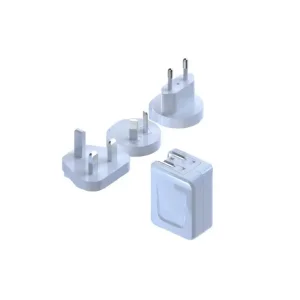
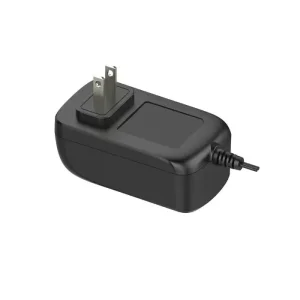
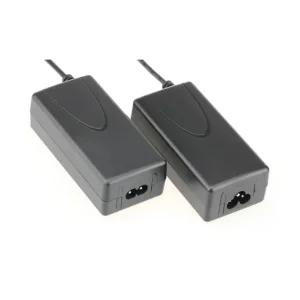
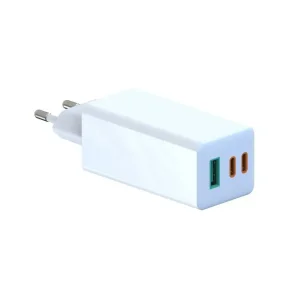
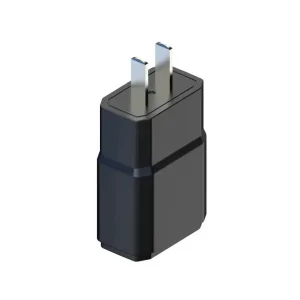
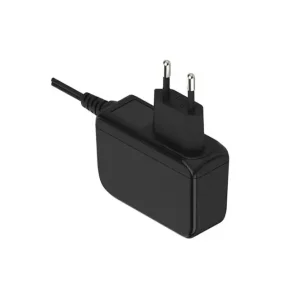
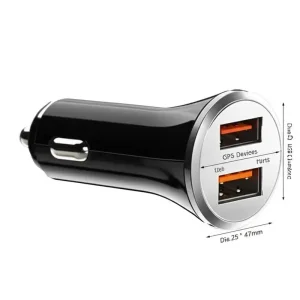
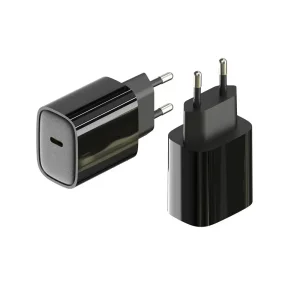
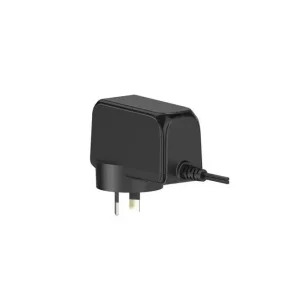
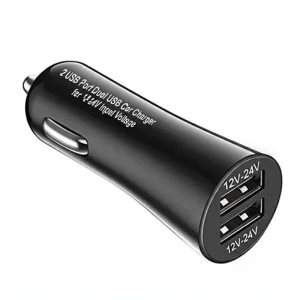
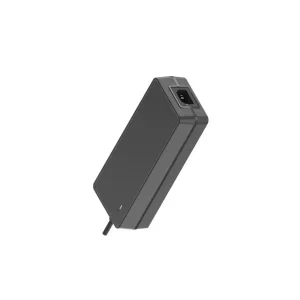
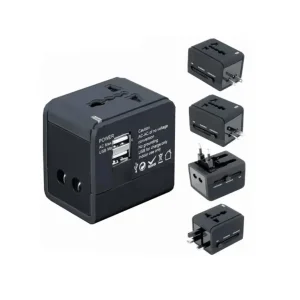
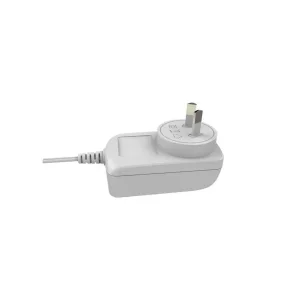
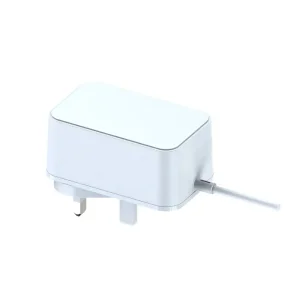
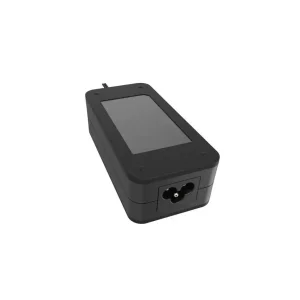
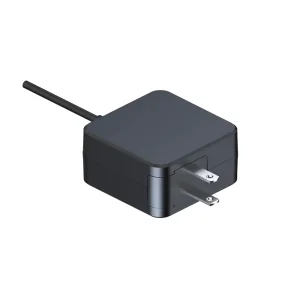
Explore our tier-1 engineered power supply catalog, fully compliant with global safety standard frameworks (UL, CE, FCC, E-Mark, PSE, CCC).
The automotive charging ecosystem has experienced a fundamental paradigm shift driven by the rapid transition from legacy USB-A (5V/2.4A standard power delivery) to high-wattage Dual USB-C Power Delivery (USB-PD 3.0 / PD 3.1 Extended Power Range) architectures. Modern consumers and enterprise fleets demand simultaneous fast-charging for power-hungry devices—including laptops (MacBook Pro, Dell XPS), tablets (iPad Pro), and flagship smartphones (iPhone, Samsung Galaxy)—directly from a vehicle's standard 12V auxiliary power outlet (cigarette lighter socket) or 24V commercial vehicle battery systems.
Engineering a high-output Dual Car Charger USB C inside an extremely compact, space-constrained enclosure presents complex power conversion, electromagnetic interference (EMI), thermal dissipation, and signal integrity challenges. Unlike stationary AC-DC wall chargers, automotive DC-DC power converters operate in a notoriously hostile electrical environment characterized by wide input voltage fluctuations, severe voltage spikes, ignition transients, and stringent thermal boundaries.
To generate output voltages up to 20V or 28V from a 12V automotive battery (which can dip down to 9V during engine cold-cranking or surge to 14.4V while idling), leading China dual car charger USB C manufacturers utilize 4-switch synchronous Buck-Boost converters. This topology dynamically shifts between Buck mode, Boost mode, and Buck-Boost mode, guaranteeing rock-solid output voltage stability under severe dynamic input swings.
By replacing traditional silicon MOSFETs with Wide Bandgap (WBG) Gallium Nitride (GaN) power transistors, switching frequencies can be elevated from 100 kHz up to 500 kHz – 1 MHz. Higher switching speeds enable dramatically smaller planar magnetics (inductors) and ceramic capacitors, achieving volumetric power densities exceeding 1.5 W/cm³ without exceeding critical junction temperatures.
Equipped with dual micro-controller units (MCUs) running proprietary protocol handshakes (USB-PD 3.0/3.1, PPS, QC4+, AFC, FCP), intelligent dual USB-C car chargers dynamically reallocate power. When a single device is plugged in, the charger delivers its full rated capacity (e.g., 100W). When a second device is connected, the MCU seamlessly adjusts power allocation (e.g., 65W + 35W) without causing connection drops or power resets.
China, particularly the Greater Bay Area (Shenzhen, Dongguan, Huizhou), produces over 85% of the world's consumer and automotive charging solutions. Global brands, Tier-1 automotive aftermarket distributors, and cross-border e-commerce leaders rely on Chinese OEM/ODM factories not merely for unit cost efficiencies, but for an unparalleled industrial ecosystem that accelerates time-to-market.
Tier-1 Chinese factories (such as Shenzhen FuYun Technology) operate fully integrated manufacturing bases spanning tooling design, high-precision plastic injection moulding, metal CNC machining, Surface Mount Technology (SMT) PCBA assembly, automated transformer winding, and ultrasonic housing welding under a single roof. This minimizes supply chain latency and drastically improves quality traceability.
Chinese engineering teams excel at Design for Manufacturability (DFM). Utilizing advanced thermal simulation software (ANSYS Icepak) and PCB layout tools, engineering samples for bespoke dual car charger designs—complete with custom industrial aesthetics, zinc-alloy metal bodies, or embedded ambient LED rings—can be produced within 7 to 14 business days.
Proximity to leading semiconductor vendors, inductor fabricators, and specialized passive component makers (e.g., automotive-grade AEC-Q200 MLCC capacitors) allows Chinese manufacturers to secure component allocation during global shortages while maintaining highly competitive Bill-of-Materials (BOM) pricing structures.
| Architecture Feature | Legacy USB-A + USB-C Chargers | Advanced Dual USB-C GaN Chargers | Strategic Enterprise Benefit |
|---|---|---|---|
| Power Conversion IC | Standard Silicon MOSFETs (<100 kHz) | GaN HEMT + Synchronous Rectification (>300 kHz) | 40% size reduction; lower thermal threshold |
| Total Output Capability | 12W – 36W Combined | 65W – 160W Combined Dynamic Power | Charges high-power laptops and phones simultaneously |
| Input Voltage Tolerance | 12V – 18V (Narrow Range) | 9V – 32V (Wide Automotive Input) | Compatible with both 12V passenger cars & 24V heavy trucks |
| Transient Protection | Basic Fuse / Simple Varistor | Automotive Load Dump TVS + Active OVP/OCP/OTP MCU | Zero failure rate against vehicle alternator voltage spikes |
| Enclosure Construction | Standard ABS Plastic | PC UL94-V0 Flame Retardant / Zinc-Alloy Shell | Superior heat dissipation & fire safety compliance |
As vehicle cabins transition into mobile offices and connected digital environments, the technical demands on automotive power conversion continue to increase. Leading manufacturers are actively implementing next-generation power electronics innovations to satisfy evolving global standards.
The migration to USB-PD 3.1 EPR enables single-port power delivery up to 140W (28V/5A) and 240W (48V/5A). In dual USB-C car chargers, integrating EPR controllers allows fleet drivers, mobile professionals, and engineers to charge high-performance workstations directly from the vehicle dash without requiring bulky DC-AC power inverters.
In compact car charger designs, high power density can lead to rapid heat buildup inside the socket. Premium factories utilize dual-sided aluminum substrate PCB designs, high thermal conductivity silicone potting compound (2.5–3.5 W/mK), and real-time NTC thermal throttling circuits that dynamically scale down wattage if internal temperatures approach 85°C.
Vehicle electrical systems experience severe load dump spikes when the battery is disconnected while the alternator is generating current. Industry-grade dual USB-C car chargers incorporate high-energy Transient Voltage Suppressor (TVS) diodes, common-mode chokes, and input LC filters to withstand ISO 7637-2 test pulses up to +100V.
Sourcing dual USB-C car chargers at scale requires rigorous evaluation beyond initial unit pricing. Enterprise buyers—including consumer electronics brands, retail chains, automotive OEMs, and logistics fleet operators—must establish clear quality criteria across the complete product lifecycle.
OEM options include laser-engraved logos, soft-touch matte painted finishes, zinc-alloy metallic plating, custom LED light guide colors, and bespoke retail box packaging with anti-counterfeiting security labels.
Ensure factory compliance with global regulatory standard mandates: E-Mark (ECE R10) for European automotive EMC compliance, FCC Part 15 Class B, CE-EMC / LVD, RoHS / REACH, UL 2089 (Vehicle Battery Adapters), and USB-IF protocol certification.
A robust quality system includes 100% SMT Automated Optical Inspection (AOI), 100% online functional testing, 4-hour full-load burn-in testing at elevated ambient temperature (45°C ± 5°C), insertion-force endurance testing (>10,000 cycles), and 1.2-meter drop testing.
Standard enclosure designs generally carry an MOQ starting at 500 – 1,000 pieces per batch. Fully custom tooling for proprietary plastic/metal enclosures requires an initial tooling commitment (amortized over 5,000 to 10,000 units).
Dual car chargers powered by USB-C are deployed across diverse automotive segments, each presenting unique operating constraints and environmental factors.
Rideshare vehicles (Uber, Lyft, Grab) operate up to 16 hours daily. Drivers require dual high-output USB-C ports to keep their driver dispatch smartphone powered while offering passenger fast-charging. Industrial-grade durability, anti-scratch metal housings, and robust spring contact clips are essential to withstand continuous socket insertions.
Heavy-duty trucks, long-haul freight vehicles, and delivery vans utilize 24V DC battery systems. Dual car chargers installed in these commercial cabs must support wide voltage inputs (up to 32V continuous) and withstand heavy vibration, high ambient dash temperatures, and extreme alternator ripple currents.
Electric Vehicles (EVs) utilize a low-voltage 12V auxiliary battery fed by a DC-DC converter from the high-voltage traction pack. Dual USB-C chargers used in EVs require ultra-low standby quiescent current (<5mA) to prevent vampire drain on the vehicle's auxiliary battery when parked for extended periods.
Founded in 2010, Shenzhen FuYun (RUIYU) Technology Co., Ltd. has established itself as an engineering-led power conversion manufacturer in China. Operating across 50,000 m² of state-of-the-art manufacturing space with automated SMT placement lines, high-precision injection moulding equipment, and rigorous QA laboratories, FuYun exports power supplies and car chargers to over 100 countries worldwide.
Our products hold more than 120 live certification files, including UL, cUL, CE (EN 62368-1), UKCA, CCC, PSE, KC, SAA/RCM, BIS, and CB compliance reports. Every model conforms to DoE Level VI and EU ErP Tier 2 efficiency standards.
In 2020, FuYun passed full BSCI social-compliance auditing and entered global retail supply networks, including Walmart and Hama (Germany). Sourcing teams benefit from pre-audited compliance documentation and streamlined vendor onboardings.
Production strictly follows ISO 9001 guidelines: bare-board inspection, first-article function verification, ultrasonic housing welding, 100% dielectric withstand testing, high-temperature burn-in ageing, and final automated testing. All lot records are permanently archived.
Technical and procurement insights curated by our senior automotive power electronics engineers.
Dual USB-C chargers require either two independent synchronous Buck-Boost power channels or a multi-output controller with dynamic power allocation. Unlike single-port chargers, dual-port architectures require advanced MCU firmware handshakes to manage power distribution dynamically (e.g., reallocating total 100W power into 65W + 35W split) without causing voltage resets on the active port when a second device is connected or disconnected.
Thermal optimization relies on three core techniques: (1) Integrating Gallium Nitride (GaN) devices to achieve over 95% power conversion efficiency, dramatically reducing wasted heat; (2) Utilizing high thermal conductivity silicone potting materials to quickly pull heat away from ICs and inductors to the outer body; and (3) Implementing full zinc-alloy or aluminum-alloy bodies that act as external heatsinks.
For North America, requirements include FCC Part 15 Class B (for EMI/EMC compliance) and UL 2089 or NRTL testing (for vehicle battery adapter safety). For Europe, CE marking (covering EMC Directive 2014/30/EU and LVD), RoHS, REACH, and E-Mark (ECE Regulation 10) certification for automotive electronic sub-assemblies (ESA) are required to ensure no interference with vehicle safety systems.
Yes, provided the charger is designed with a wide DC input range (typically 9V to 32V DC). Premium chargers incorporate wide-input step-down/step-up controllers along with high-voltage rated input capacitors (rated for 40V or 50V) to withstand maximum charging voltage from 24V heavy-truck battery alternators.
For standard tooling with customized logo branding and packaging, the typical MOQ is 500 to 1,000 units, with production lead time running 20 to 25 days. For custom injection moulds or unique metal housings, tooling lead time takes approximately 20 to 30 days, followed by 25 days for initial mass production after sample sign-off.
Engineered dual car chargers feature front-end transient protection circuitry consisting of high-power TVS (Transient Voltage Suppressor) diodes rated for high peak pulse power dissipation. These TVS components clamp incoming voltage surges below 36V within nanoseconds, safeguarding internal sensitive PWM controllers and downstream connected consumer devices.
Browse our extended product lines for specialized medical, industrial desktop, travel, and mobile charging applications.