Explore our primary certified power adapters, travel power supplies, and automotive charging platforms engineered for global OEM brand deployment.
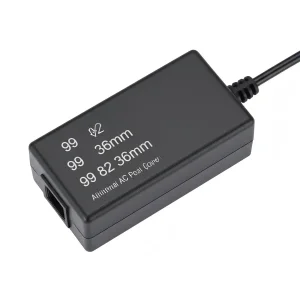
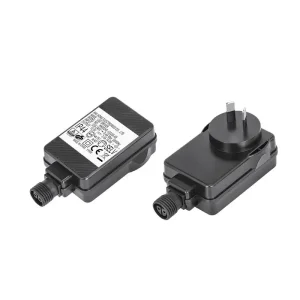
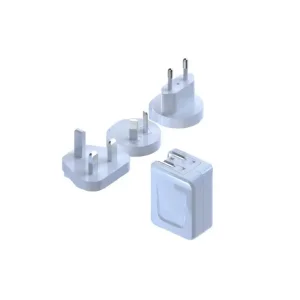
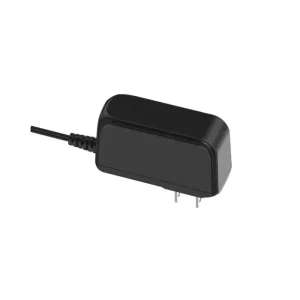
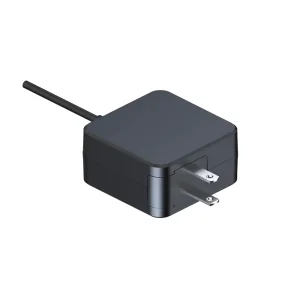
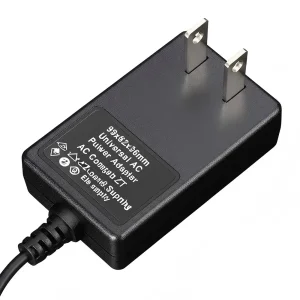
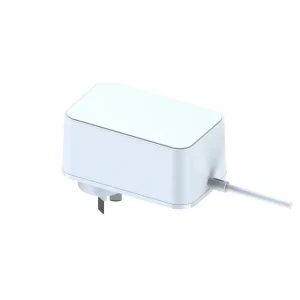
The rapid transition of the global consumer electronics market toward the unified USB Type-C standard—accelerated by European Union Directive 2022/2380—has fundamentally reshaped automotive accessory engineering. Sourcing high-performance Wholesale USB C Car Charger Adapters directly from verified China factories is no longer merely a price-per-unit equation; it is a complex technical evaluation involving thermal dissipation dynamics, electromagnetic compatibility (EMC), fast-charging protocol handshakes, and automotive-grade transient voltage protection.
Modern vehicles generate a harsh electrical environment. Fluctuations across 12V passenger vehicle DC buses (operating natively between 11.5V and 14.8V) and 24V heavy commercial vehicle buses (reaching up to 28.8V) require in-car DC-DC buck-boost power converters to deliver pristine voltage regulation. When procurement managers evaluate a direct manufacturing partner, they must look beyond aesthetic enclosure designs to analyze PCBA topology, controller IC integration, thermal throttling safety margins, and international safety compliance.
Guangdong province, specifically the Shenzhen-Dongguan electronics manufacturing corridor, produces over 85% of the world’s automotive power adapters. Selecting an OEM/ODM partner with vertically integrated manufacturing infrastructure in this hub offers enterprise buyers strategic operational leverage.
Tier-1 factories utilize fully automated surface-mount technology (SMT) lines equipped with Yamaha and Fuji high-speed placement machines. Automated Optical Inspection (AOI) and Solder Paste Inspection (SPI) guarantee zero-defect component alignment down to 0201 passive packages and fine-pitch QFN controller ICs.
Direct partnerships with top semiconductor foundries (such as Navitas, Power Integrations, Southchip, and Injoinic) enable factories to secure priority wafer allocations. This drastically reduces bill-of-materials (BOM) costs while guaranteeing component supply-chain stability during global silicon shortages.
Equipped with internal CNC machining centers and precision spark erosion tooling, leading factories can transform CAD concepts into physical aluminum or ABS/PC shell prototypes within 7 to 10 working days, accelerating overall product development life cycles for brand owners.
The market for automotive fast chargers is rapidly shifting away from legacy silicon MOSFET switches operating at sub-100kHz frequencies toward wide-bandgap Gallium Nitride (GaN III / GaN IV) semiconductor topologies.
Gallium Nitride High Electron Mobility Transistors (HEMTs) allow switching frequencies to exceed 500kHz to 1MHz. Higher frequencies significantly reduce the required physical size of power inductors and output ceramic capacitors (MLCCs). This allows a 100W Dual USB-C car charger to fit inside a ultra-compact cigarette lighter housing without sacrificing power density.
Modern enterprise-grade car adapters incorporate smart MCU microcontrollers that negotiate power profiles via USB PD 3.1 Extended Power Range (EPR) up to 28V/5A (140W) per port. Furthermore, Programmable Power Supply (PPS) protocol support dynamically adjusts output voltage in 20mV steps from 3.3V to 21V, minimizing thermal losses inside connected mobile devices.
| Engineering Parameter | Legacy Silicon Adapter (18W - 36W) | Next-Gen GaN Fast Charger (65W - 140W+) |
|---|---|---|
| Power Semiconductor | Standard Silicon MOSFET (Si) | Gallium Nitride (GaN III HEMT) |
| Switching Frequency | 60 kHz – 100 kHz | 300 kHz – 1.2 MHz |
| DC-DC Conversion Efficiency | 82% – 88% | 94% – 97% |
| Max Operating Temperature | High Thermal Saturation (> 75°C) | Active Thermal Throttling (< 55°C) |
| Protocol Compatibility | QC 3.0 / Legacy USB-A 5V 2.4A | USB PD 3.1 EPR / PPS / QC5 / AFC / FCP |
| Internal Thermal Management | Basic Heat Sink / Silicone Gel | 3D Copper Heat Spreader + Phase Change Gel |
Wholesale USB C car chargers serve diverse global market verticals beyond consumer retail channels. Factories design customized electrical and enclosure variants to withstand specific operational stresses.
Long-haul trucks and delivery fleets operate under 24V DC battery environments that experience severe voltage spikes during engine cranking (Load Dump ISO 7637-2 Pulse 5a/5b). Industrial-grade USB-C car adapters feature integrated transient voltage suppressors (TVS diodes) and wide input voltage tolerances (9V to 36V DC) to protect ruggedized telematics tablets, handheld scanners, and driver dashcams.
Modern Electric Vehicles demand low noise interference to prevent cross-talk with advanced driver-assistance systems (ADAS), Bluetooth 5.3 arrays, and digital radio (DAB). Specialized factories engineer LC filtering networks that meet strict CISPR 25 Class 5 automotive electromagnetic compatibility (EMC) standards.
Uber, Lyft, and taxi fleet operations require multi-port charging hubs with high physical durability. Reinforced spring-contact clips made of beryllium copper resist over 10,000 insertion cycles, ensuring continuous electrical contact even over rough road surfaces.
Professional China factories enforce systematic testing workflows aligned with ISO 9001 and IATF 16949 automotive standards to guarantee batch-to-batch consistency for global importers.
Unpopulated PCBs undergo 100% electrical continuity and insulation resistance testing before SMT assembly to eliminate latent micro-cracks.
Solder paste volume is inspected in 3D (SPI) prior to high-speed IC placement, preventing cold solder joints or component bridging.
Initial PCBA samples are checked for standby current, voltage accuracy, protocol handshakes, and ripple voltage limits prior to full mass run.
High-frequency ultrasonic waves fuse flame-retardant PC/ABS enclosure halves without glue or visible seams, passing 1.5-meter drop tests.
High-voltage insulation safety gates ensure primary-to-secondary isolation complies with UL 2089 and CE automotive power standards.
Every manufactured unit is loaded to 100% rated capacity inside elevated thermal chambers (45°C ± 5°C) for 2 to 4 hours to eliminate early-life component mortality.
Post-ageing automated test equipment (ATE) re-verifies OCP, OVP, SCP, and OTP safety protection triggers on every serial-numbered charger.
Retail or master cartons undergo ISTA 1A drop testing and environmental vibration simulation before container loading.
Established in 2010, Shenzhen FuYun(RUIYU) Technology Co., Ltd. operates a 50,000 m² advanced manufacturing matrix across Shenzhen and Shaanxi. Holding over 120 global safety certifications, FuYun delivers high-density AC/DC power adapters, PD fast chargers, and custom automotive power supplies to tier-1 brands in more than 100 countries.
Products carry full international certifications, including UL/cUL, CE (EN 62368-1), UKCA, FCC, E-Mark, CCC, PSE, KC, SAA/RCM, and CB reports. Environmental compliance includes RoHS, REACH, and DoE Level VI / EU ErP Tier 2 efficiency standards.
As a BSCI-audited production facility, FuYun was officially qualified into the Walmart global supply chain network in 2020. OEM clients benefit from ready-made social compliance and ethical manufacturing documentation.
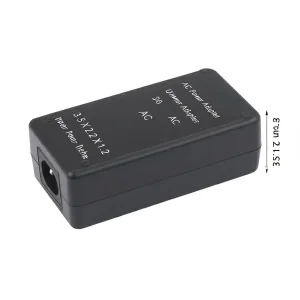
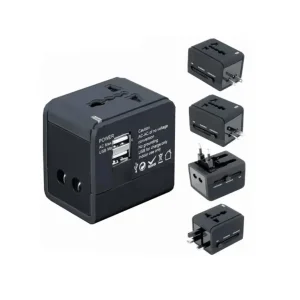
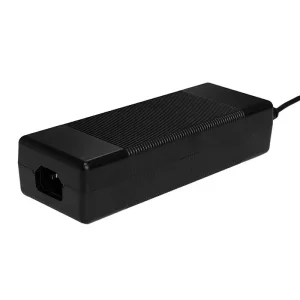
Explore our expanded power hardware inventory, spanning high-wattage desktop supplies, medical-grade power adapters, and specialized car charging accessories.
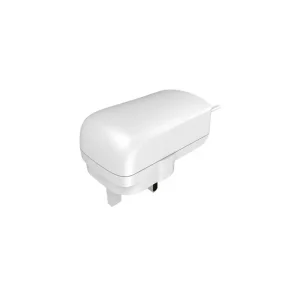
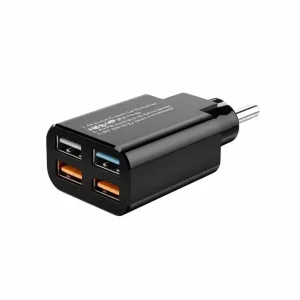
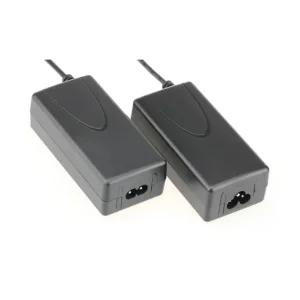

Clear engineering and commercial answers to guide purchasing teams, OEM brand managers, and hardware procurement directors.
For standard enclosure designs with custom logo laser etching, customized brand packaging, and tailored cable configurations, our baseline factory MOQ starts at 500 units per model. This MOQ threshold allows automated high-speed SMT lines to be calibrated economically without amortizing high setup overheads into the unit cost. For fully bespoke enclosure designs requiring custom plastic injection tooling, we recommend a first-run batch of 3,000 units to amortize mold development costs effectively.
Gallium Nitride (GaN) power transistors operate with significantly lower RDS(on) resistance compared to traditional silicon MOSFETs, achieving DC-DC energy conversion efficiencies of 95% to 97%. This ultra-high efficiency dramatically reduces wasted energy dissipated as heat. Furthermore, our factories integrate 3D copper heat spreaders, high thermal conductivity phase-change potting compound, and negative temperature coefficient (NTC) thermistors that dynamically throttle output wattage if internal temperatures approach 55°C.
Every car charger platform engineered by our factory includes 5-stage active hardware protection: Over-Voltage Protection (OVP), Over-Current Protection (OCP), Short-Circuit Protection (SCP) with auto-recovery, Under-Voltage Lockout (UVLO), and Over-Temperature Protection (OTP). Additionally, front-end TVS diodes filter automotive alternator load dumps and voltage transients compliant with ISO 7637-2 specifications.
For European distribution, products must carry CE marking under the EMC Directive 2014/30/EU and RoHS/REACH environmental compliance. Vehicles in Europe often require E-Mark certification (ECE R10) for equipment plugged into vehicle sockets. For the United States and Canada, FCC Part 15 Class B compliance is mandatory for EMI emission limits, while UL 2089 (Standard for Vehicle Battery Adapters) serves as the primary safety benchmark recognized by major retail chains.
Golden samples built on established engineering platforms are dispatched within 5 to 7 working days. Customized PCB layouts or bespoke housing prototypes take 12 to 15 working days. Once samples are approved and deposit confirmed, mass production lead time is typically 20 to 25 days, depending on component sourcing schedules and packaging complexity.