Explore our high-reliability power conversion components engineered for global automotive, commercial fleet, and consumer electronic deployments.
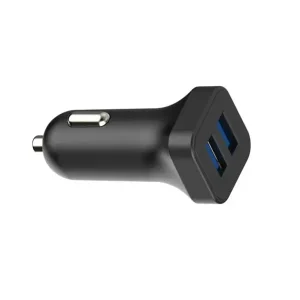
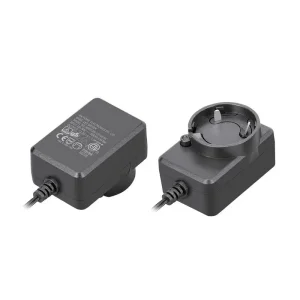
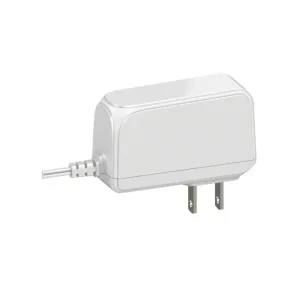
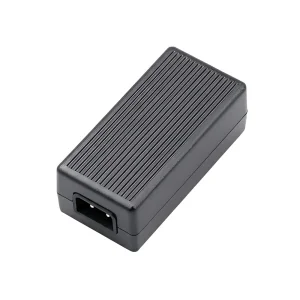
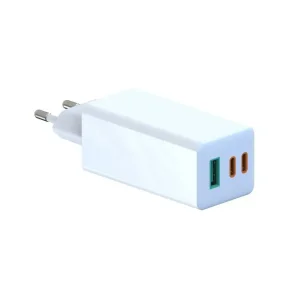
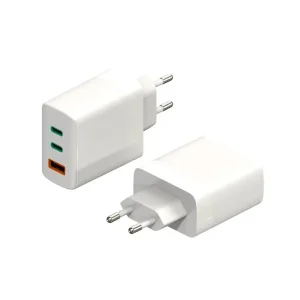
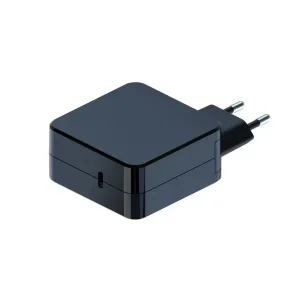
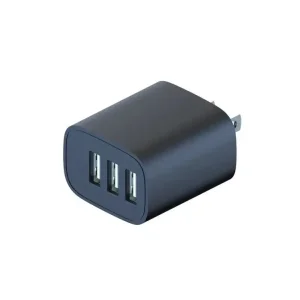
Analyzing the macro-level migration from legacy 12V/24V resistive chargers to intelligent high-wattage USB-C Power Delivery (PD 3.1) architectures across global automotive supply chains.
The global automotive aftermarket and OEM supply chain are undergoing an unprecedented shift. Legacy USB-A architecture (5V/2.4A max 12W) is rapidly fading as mobile devices, laptops, tablet-based fleet telematics, and portable medical tools demand USB Power Delivery 3.1 (PD 3.1) protocol support. Modern vehicles require Extended Power Range (EPR) buck-boost topologies capable of delivering up to 140W (28V/5A) continuously from a standard cigarette lighter socket or integrated 12V/24V auxiliary power bus.
Electric Vehicles (EVs) and Commercial Fleets operate on complex low-voltage DC auxiliary networks. While primary traction batteries run at 400V to 800V DC, cabin auxiliary sockets tap into stabilized 12V or 24V step-down buses. Wholesale buyers must navigate strict vehicle battery fluctuations, engine load dump transients (up to 40V spikes), and rigorous EMC requirements (CISPR 25 Class 5) to prevent radio frequency interference in autonomous driving modules.
Global regulatory bodies including the European Union (CE EN 62368-1, E-Mark ECE R10), North American authorities (FCC Part 15, UL 2089 for vehicle battery adapters), and Asian regulatory hubs (PSE, KC, CCC) are enforcing non-negotiable efficiency standards. Modern fast car chargers must exhibit standby power dissipation under 30mW and operate at full-load thermal equilibrium without exceeding 65°C skin temperature.
Quantifiable metrics showcasing Shenzhen FuYun (RUIYU) Technology Co., Ltd.'s vertical integration, certification portfolio, and global delivery footprint.
A deep technical breakdown comparing legacy silicon MOSFET power stages against next-generation Gallium Nitride (GaN) switching circuits in high-density vehicle power chargers.
| Engineering Metric | Silicon MOSFET (Standard Car Charger) | GaN III-V Semiconductor (FuYun Advanced Fast Charger) | Commercial Sourcing Impact |
|---|---|---|---|
| Switching Frequency | 60 kHz – 150 kHz | 500 kHz – 2 MHz | Reduces inductor volume by up to 60%, yielding ultra-compact flush-fit housings. |
| Power Conversion Efficiency | 82% – 88% Max | 94% – 97.5% Continuous | Dramatically lower heat generation inside sealed vehicle power sockets. |
| Thermal Conductivity & Spread | Standard PCB Copper Traces | Aluminum Metal-Core PCB + Thermally Conductive Compound | Prevents thermal throttling, allowing full 65W/100W PD output continuously for hours. |
| Fast Charging Protocols | Fixed 5V/9V DC Output | PD 3.1, PPS, QC5, SCP, FCP, AFC Dynamic Voltage Scaling | Universal compatibility across Apple, Samsung, Dell, Lenovo, and drone batteries. |
| Transient Dump Protection | Basic TVS Diode | Multi-Stage Active Surge Suppressor (ISO 7637-2 Compliant) | Safeguards vehicle electronics against voltage spikes up to 40V DC during alternator load dump. |
Vehicle battery voltages fluctuate wildly. In a 12V passenger car, battery terminal voltage can drop to 9V during engine ignition cranking and rise to 14.6V during alternator charging. In 24V heavy commercial trucks, input ranges extend up to 32V DC. FuYun’s high-power USB C car chargers utilize a 4-switch synchronous buck-boost IC architecture. This topology maintains a constant, ripple-free regulated output (e.g., 20V/5A 100W PD) regardless of whether input DC voltage is higher or lower than the target output rail.
Heat is the primary cause of early component failure in automotive power electronics. Enclosed in a compact cigarette lighter receptacle, heat cannot rely on active fan cooling. FuYun engineers solve this using high-density flame-retardant PC (UL94 V-0) and anodized zinc-aluminum alloy shells combined with potting encapsulation. The internal smart MCU monitors internal NTC thermistors in real-time, executing micro-adjustments to output current if junction temperatures approach 85°C, ensuring zero thermal runaway or fire hazards.
Poorly designed switching chargers generate conducted and radiated electromagnetic interference (EMI) that disrupts vehicle FM/AM radio, GPS navigation, and ADAS radar sensors. FuYun PCB designs integrate differential-mode chokes, X/Y ceramic safety capacitors, and multi-layer ground shielding. Every wholesale car charger batch is verified under CISPR 25 Class 5 automotive standards, ensuring 100% silent electrical operation across all radio bands.
How targeted engineering configurations serve diverse commercial applications across North America, Europe, Asia-Pacific, and Latin American markets.
Long-haul trucks in North America and Europe operate on 24V DC battery platforms. Truck drivers rely on heavy-duty ruggedized USB C chargers to keep ruggedized fleet tablets, ELD (Electronic Logging Devices), and heated travel mugs continuously powered. FuYun customizes high-durability chargers with reinforced spring-clip contacts that resist severe road vibration and input surges up to 36V DC without intermittent disconnects.
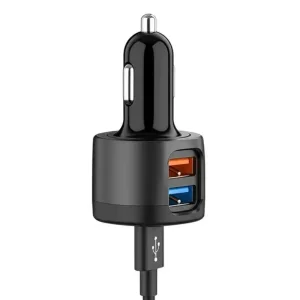
Taxi operators and ride-hailing services (Uber, Lyft, Grab) demand multi-port dual USB-C + USB-A high-output chargers. Passengers require instantaneous fast charge (PPS 3.3V-11V/3A) for iPhones and Android devices simultaneously. FuYun’s intelligent power distribution matrix dynamically allocates output (e.g., 45W + 20W) when two devices are connected, eliminating power dropping or resetting during handshake negotiations.
Marine boats and Recreational Vehicles (RVs) experience high humidity, salt spray, and extreme ambient temperature ranges (-20°C to +60°C). FuYun supplies IP65-sealed socket-mount USB C fast chargers featuring protective silicone dust covers, gold-plated internal contacts, and anti-corrosive PCBA conformal coating, guaranteeing multi-year operational lifespans in marine environments.
Every USB-C fast car charger and AC/DC power adapter manufactured by FuYun undergoes rigorous multi-point verification before leaving our assembly lines.
High-speed Yamaha surface mount (SMT) lines place precision IC controllers, GaN FETs, and SMD capacitors. 100% solder-paste SPI and post-reflow AOI eliminate bridging, cold joints, or component misalignment.
Prior to housing assembly, bare PCBA boards undergo automated needle-bed electrical testing to confirm voltage regulation tolerances, open/short protection, and initial idle power consumption.
Housings are permanently sealed using ultrasonic welding technology. This screwless construction guarantees uniform structural integrity, superior drop-test resilience (1.5-meter drop test passed), and seamless aesthetic finishing.
Primary-to-secondary isolation circuits undergo high-voltage insulation dielectric withstand testing (3000V AC for wall adapters; 500V DC surge for car chargers) to ensure zero electrical leakage hazards.
100% of finished units are loaded onto automated burn-in racks in a controlled 40°C thermal chamber. Chargers operate under 100% full-rated load for 2 to 4 hours to eliminate early-life component mortality.
Automated Test Equipment (ATE) measures ripple noise, OCP/OVP/SCP trip thresholds, and USB PD protocol handshakes. Every unit receives a unique laser-engraved batch serial number tied to its factory component lot history.
Pioneering innovations shaping the next decade of wholesale USB C fast charger manufacturing and factory customization.
The roadmap toward 48V EPR will allow vehicle power outlets to charge high-performance gaming laptops, portable workstation power stations, and electric two-wheelers directly from cabin sockets at 48V/5A (240W) efficiency levels without massive transformers.
Next-gen commercial car chargers will feature Bluetooth Low Energy (BLE) or CAN-bus communication modules, transmitting real-time charging telemetry, battery health diagnostics, and cabin power consumption metrics straight to fleet control software.
In response to global carbon-neutrality mandates, FuYun is integrating Post-Consumer Recycled (PCR) polycarbonates and bio-based flame-retardant resins into housing mold production, reducing environmental impact while maintaining UL94 V-0 safety compliance.
Authoritative answers provided by FuYun’s chief power supply engineering team regarding custom OEM orders, electrical parameters, and global certifications.
For standard production models utilizing our qualified mold library, the baseline MOQ starts at 500 pieces per order. This threshold allows our SMT automated assembly line and laser-marking tooling to operate at optimal cost-efficiency without transferring high set-up overhead to the buyer. For custom shell injection molding, unique pantone color matching, or bespoke housing logo tooling, we recommend an initial order of 3,000 pieces to amortize custom mold costs effectively.
Vehicle electrical systems experience severe voltage spikes, notably alternator load dumps governed by ISO 7637-2 standards. FuYun’s fast car chargers incorporate multi-stage protection networks, including high-capacity Transient Voltage Suppressor (TVS) diodes, metal oxide varistors (MOV), and dedicated over-voltage clamp ICs. This architecture guarantees that transient spikes up to 40V DC are safely clamped before reaching sensitive DC-DC buck-boost controllers or connected smartphones and laptops.
Yes. Our dual and multi-port fast car chargers utilize independent dual-channel buck-boost converter ICs or intelligent dynamic power sharing firmware. For example, in a 65W dual-port configuration (USB-C1 + USB-A), Port C delivers full PD 45W while Port A independently delivers 18W Quick Charge 3.0 simultaneously without power interruption, dropping output rails, or re-initiating handshakes when a second cable is plugged in.
FuYun holds more than 120 active safety and EMC certificates. Our vehicle fast chargers can be supplied with complete certification documentation including CE (EN 62368-1 standard), FCC Part 15 Class B, E-Mark (ECE R10 automotive regulation), RoHS 2.0, REACH, PSE (Japan), KC (Korea), and UL 2089 (Standard for Vehicle Battery Adapters). Compliance reports are maintained in our factory archives for fast customs clearance and brand audit verification.
Electrical samples built upon existing qualified topologies are ready within 5 to 7 working days. Custom PCB layout modifications with targeted fast-charging protocol firmware require 12 to 15 days. Mass production lead time is typically 20 to 25 calendar days following sample approval and deposit confirmation. Our dual-manufacturing base layout in Shenzhen and Shaanxi guarantees robust capacity redundancy during seasonal peak demand.
Ultra-compact zinc-alloy or aluminum flush-fit chargers feature extremely small housing volumes. FuYun uses high-thermal-conductivity potting compounds (silicone elastomer) to fill all internal voids around transformers and MOSFETs. This potting transfers heat uniformly to the metal casing, which acts as a full-surface heatsink. Coupled with integrated NTC thermal throttling, skin temperature stays well within international IEC 62368-1 safety thresholds.
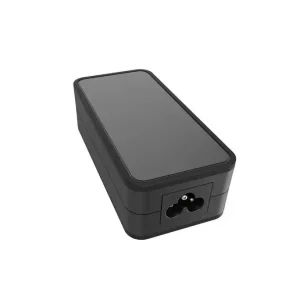
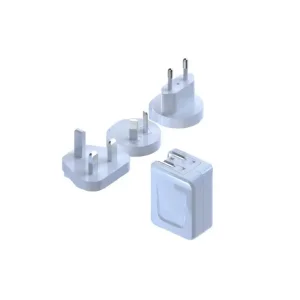
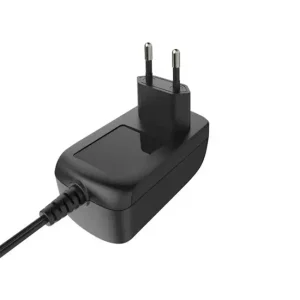
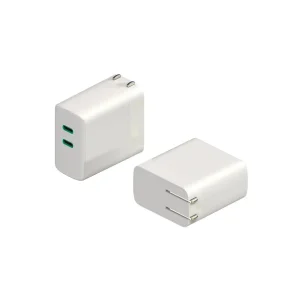
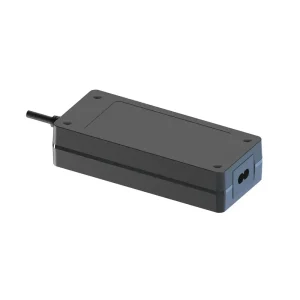
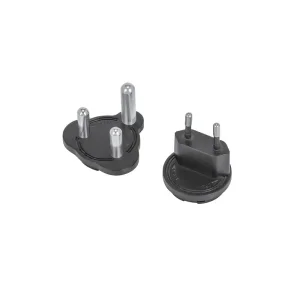
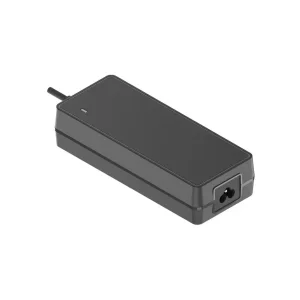
Explore our broader power adapter solutions engineered with identical high-reliability SMT processes and worldwide safety credentials.
Whether you require custom housing tooling, private label branding, or high-volume wholesale USB C fast car chargers built to strict automotive EMI standard compliance, our R&D project engineers reply within 24 hours.