Engineered specifically for continuous operation, high suction efficiency, and ruggedized power handling in tropical and dust-heavy environments.
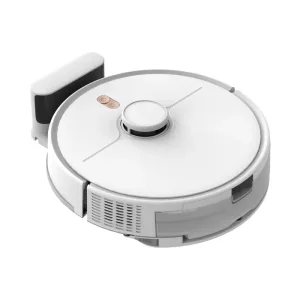
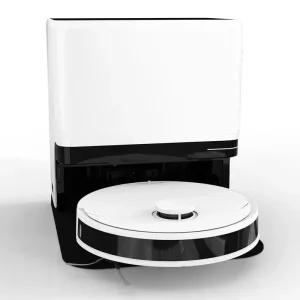
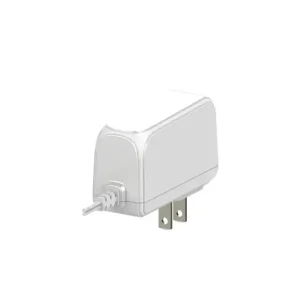
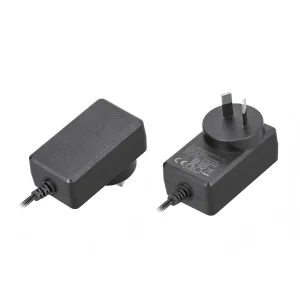
Understanding the operational micro-climate, flooring substrates, and power infrastructure required for successful B2B robotic clean-tech deployment in West Africa.
The rapid growth of Grade-A office spaces, luxury hospitality complexes, bank branches, and retail malls across Accra (Airport Residential Area, Ridge, Cantonments) and Kumasi has driven an unprecedented demand for automated facility maintenance. B2B facility managers are shifting from manual labor to autonomous cleaning fleets to guarantee consistent hygiene metrics and reduce long-term operational expenditure (OPEX).
Ghana's annual Harmattan season (December to March) brings dry, dust-laden northeastern trade winds carrying fine particulate matter (PM2.5 and PM10). Standard household vacuums frequently fail due to motor overheating and filter clogging. Autonomous vacuum robots intended for Ghana require multi-cyclonic separation, HEPA H13 filtration, sealed bearing drive wheels, and dust-proof ultrasonic sensors to maintain continuous operation.
Electrical systems in Ghana operate at 230V/50Hz nominal grid voltage, but regional power fluctuations, brownouts, and voltage spikes demand industrial-grade AC-DC power conversion. Docking stations must feature ultra-wide input voltage resilience (90V–264V AC), integrated over-voltage protection (OVP), and thermal battery management (BMS) tailored for ambient temperatures exceeding 35°C.
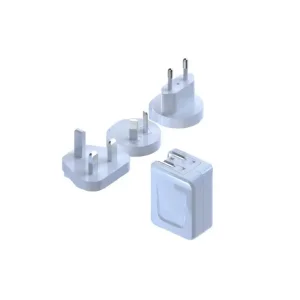
Direct procurement from specialized Chinese manufacturing plants enables Ghanaian B2B buyers to customize firmware parameters, sensor sensitivity for high-contrast terrazzo floors, and plug top standards (UK 3-pin BS 1363 Type G). Establishing a robust OEM/ODM relationship ensures long-term access to modular spare parts, battery packs, and technical training.
A comprehensive analysis of motor dynamics, LiDAR/vSLAM navigation, multi-stage filtration, and thermal dissipation systems designed by OEM factories in China.
Standard vacuum motors lose airflow velocity rapidly when encountering fine African dust. Our engineered solutions incorporate Japanese NIDECC brushless motors capable of generating up to 6,000Pa to 8,000Pa static suction pressure. The internal airway uses a streamlined conical venturi design to minimize internal turbulence, ensuring that heavy sand granules and ultrafine dust particles are swept cleanly into the bin without settling in internal channels.
Navigating complex commercial interiors with low ambient lighting or reflective polished tile floors requires hybrid perception. Our latest hardware revision combines 360° laser distance sensors (LDS) with front-facing 3D Time-of-Flight (ToF) cameras. This allows real-time dynamic obstacle mapping down to 2mm resolution, preventing the robot from becoming trapped on low-profile chair legs, cable tangles, or irregular door sills common in older structures in Tema and Accra.
| Specification Feature | Standard Residential Model | Commercial / Office Grade | Heavy-Duty Industrial Model |
|---|---|---|---|
| Suction Power (Pa) | 2,000 - 3,500 Pa | 4,500 - 6,000 Pa | 8,000 - 12,000 Pa |
| Battery Capacity & Type | 2600 mAh Li-ion | 5200 mAh High-Density Li-ion | 10,000 mAh LiFePO4 Thermal-Safe |
| Charging Input Range | 100-240V AC (Basic) | 90-264V AC Wide (Surge Proof) | 90-264V AC Heavy Industrial Shielding |
| Filtration Rating | Standard Washable Nylon | Dual-Stage HEPA H13 (99.97%) | Triple Cyclonic + Washable HEPA H14 |
| Flooring Adaptability | Wood, Ceramic Tiles | Terrazzo, Polished Concrete, Carpet | Industrial Epoxy, Rough Tiles, Concrete |
| Dust Collection Capacity | 0.4 Liters | 2.5L Auto-Empty Dock | 4.0L Auto-Empty Industrial Station |
Our 50,000 m² Shenzhen & Shaanxi manufacturing facilities utilize strict quality assurance procedures to ensure zero-defect exports to global markets.
Automated Surface Mount Technology with 3D Solder Paste Inspection (SPI) and Automated Optical Inspection (AOI) to guarantee circuit reliability.
100% automated open/short electrical validation of all mainboards prior to sensory component integration, preventing hidden micro-faults.
Dynamic suction pressure testing, acoustic decibel verification, and brushless motor current draw balancing under high resistance load.
Precision ultrasonic welding for structural housing chassis, ensuring IP5X dust protection against fine Harmattan ambient dust.
3000V AC primary-to-secondary dielectric strength testing on docking stations and charging power adapters for absolute user electrical safety.
100% of finished robotic units undergo continuous 4-hour active operational testing inside 40°C elevated temperature burn-in chambers.
Robotic calibration on simulated mixed-flooring track: obstacle avoidance, stair drop detection, auto-docking precision within ±5mm.
Moisture-barrier vacuum wrapping, heavy-duty double-wall corrugated shipping master cartons tested to ISTA-1A drop standards for ocean freight to Tema Port.
Empowering Ghanaian distributors, facility management firms, and OEM brand owners with streamlined procurement frameworks.
All export units comply strictly with Ghana Standards Authority (GSA) requirements and ECOWAS electrical safety benchmarks. Test documentation includes CB scheme reports, CE EN 62368-1 safety standards, EN 55032 Class B electromagnetic compatibility (EMC) reports, and RoHS hazardous substance clearance.
We offer flexible shipping terms including FOB Shenzhen / Hong Kong, CIF Tema Port, or door-to-door DDP arrangements. Bulk orders can be customized into Knock-Down (CKD) or Semi-Knock-Down (SKD) kits to minimize import tariff structures and facilitate localized assembly in West African trade zones.
To eliminate equipment downtime for commercial buyers in Ghana, every bulk container order includes a 2% buffer of critical spare parts: modular PCB mainboards, drive wheel modules, side brush gearboxes, high-efficiency lithium battery packs, and replacement HEPA filter sets.
Pioneering clean-tech breakthroughs designed to further optimize power conversion, solar docking compatibility, and AI multi-robot orchestration.
Direct DC solar charging dock connectivity allowing robotic fleets in off-grid or power-unstable commercial zones across West Africa to run 100% on renewable energy during daylight hours.
Integrating GaN power semiconductors into charging stations to reduce dock thermal emissions by 40% while accelerating robot replenishment times from 3.5 hours down to 45 minutes.
Cloud-connected mesh network orchestration allowing multi-story commercial buildings in West Africa to operate 10+ synchronized units with real-time mapping updates and centralized telemetry.
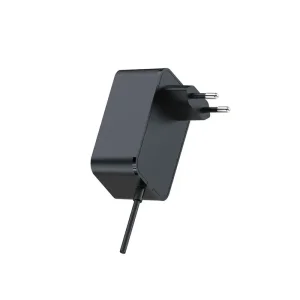
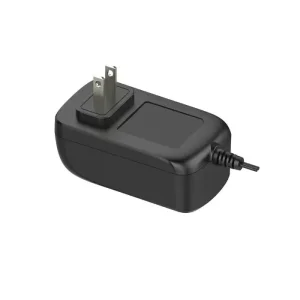
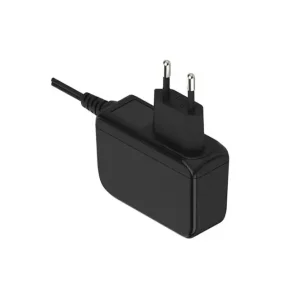
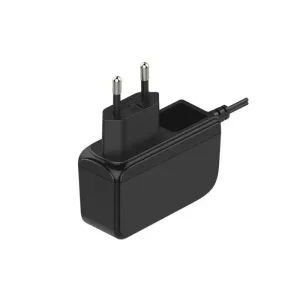
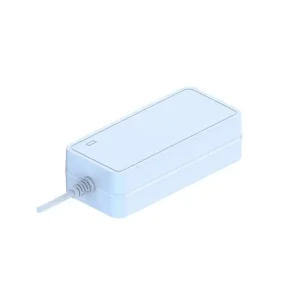
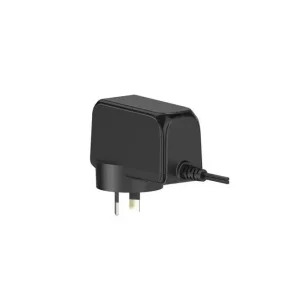
Explore all certified models engineered for OEM/ODM customization, supporting diverse voltage requirements, plug standards, and suction powers.
Addressing essential technical, logistics, compliance, and custom ordering details for B2B importers.
Standard housing configurations start from 500 units per model order. This threshold allows economic SMT tool setup, customized silk-screen branding, custom packaging, and pre-programmed localized firmware. For fully custom mold designs, an initial order quantity of 3,000 units is recommended to amortize tooling investments efficiently.
Our exports destined for West Africa feature upgraded HEPA H13 dual-stage filtration systems paired with high-efficiency cyclone dust separators. Drive wheels utilize sealed bearing housings to prevent dust ingress, and LiDAR optical windows feature static-conductive anti-dust coatings to maintain sensor clearance.
All charging bases are equipped with ultra-wide input switching power technology rated for 90V–264V AC input. They integrate robust over-voltage protection (OVP), over-current protection (OCP), short-circuit protection (SCP), and common-mode choke filters to insulate sensitive motherboard circuits from local grid transients.
We hold over 120 active certifications globally. Export documentation includes CE EN 62368-1, CB scheme reports, UL compliance, UKCA certificates, and DoE Level VI / EU ErP Tier 2 energy efficiency reports. All materials comply with RoHS and REACH standards.
Evaluation samples built on standard platforms are ready in 7–10 business days. Custom hardware modifications or brand-new PCB layout designs require 15–20 days. Volume mass production is typically completed in 20–30 days after sample sign-off, followed by ocean transit to Tema Port.
Consult with our senior robotics engineers and power architectural team today. Receive custom BOM quotations, technical specs, and target lead times within 24 hours.